

Historical setting
Ancient Egypt
Ancient Egypt grew up along the Nile and lasted about 3,000 years. Explore 37 of its places: what each one was for, how it worked and where you can still see real examples today.
- 37 places
- 4 vehicles
- 8 people
- 71 photos of real places
- Guided tour: Life on the Nile
Look around the city
Select any building, person or vehicle to open its page. Everything is also listed below.
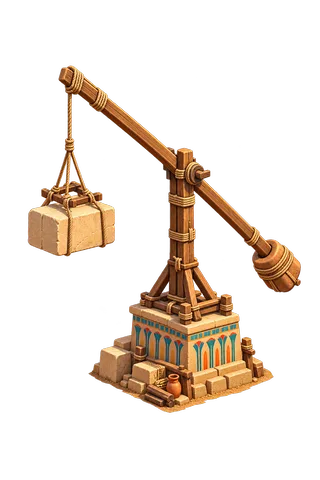 Lifting lever
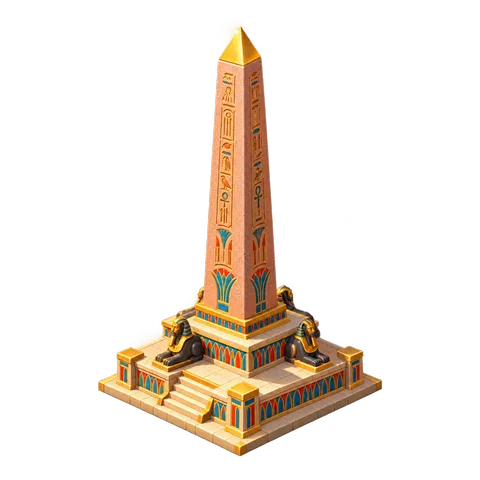 Obelisk
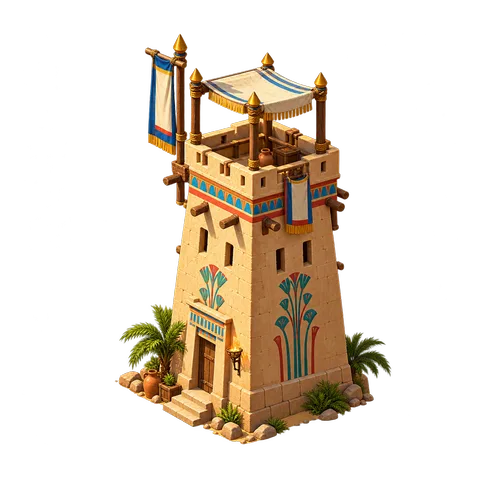 Watchtower
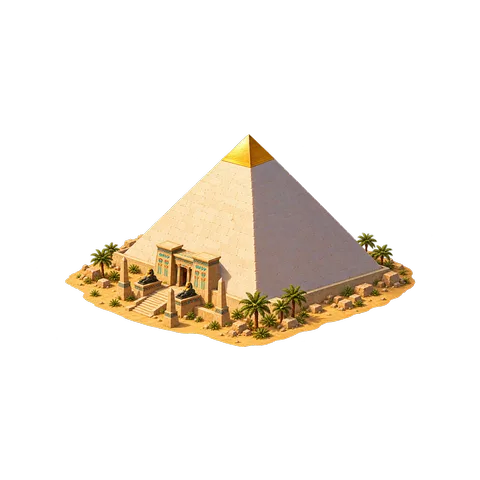 Pyramid
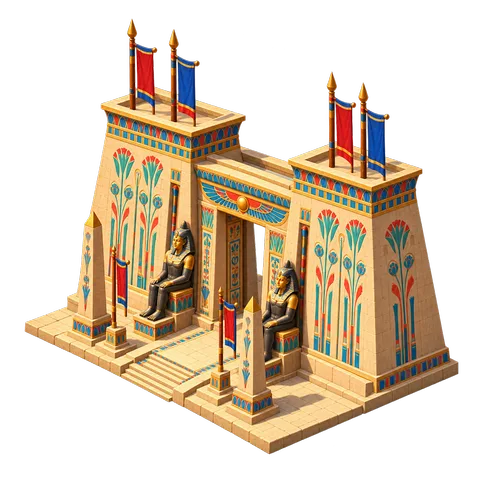 Temple gateway
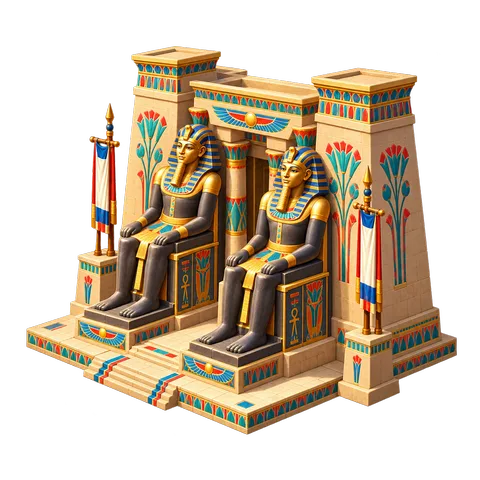 Twin colossi
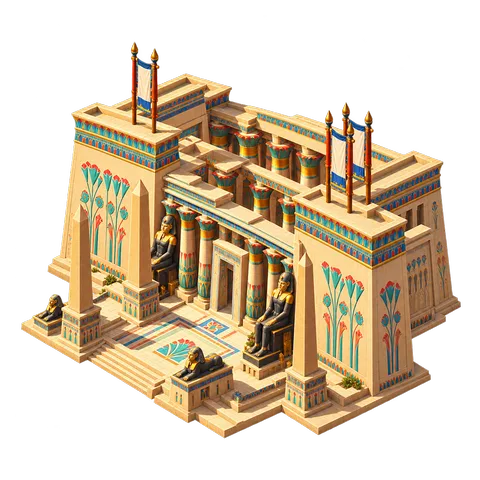 Hall of columns
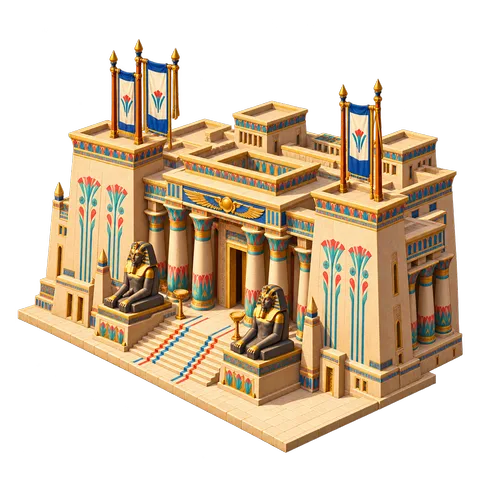 Pharaoh's palace
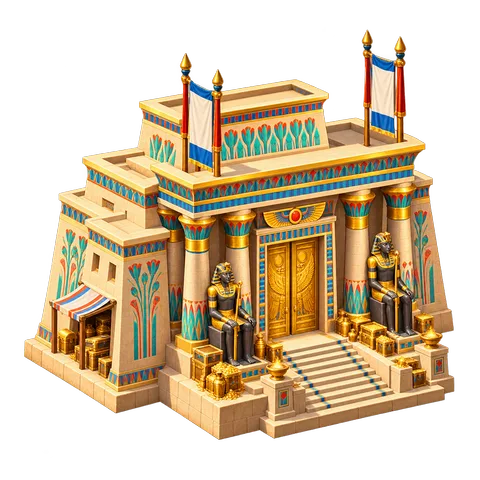 Royal treasury
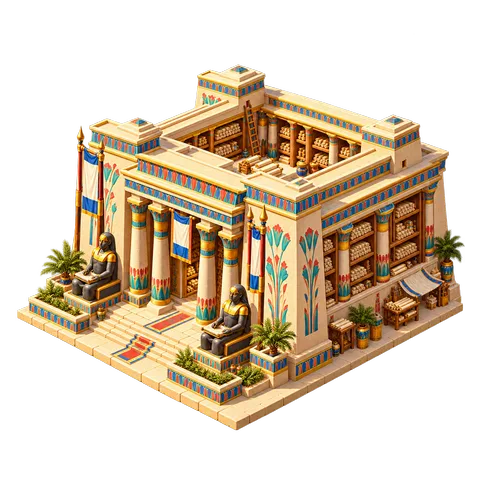 Great Library
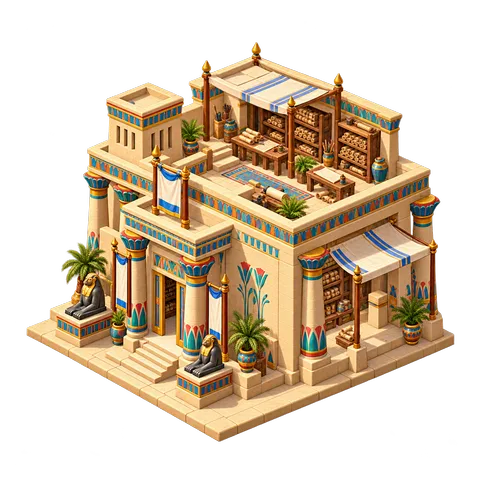 House of Life
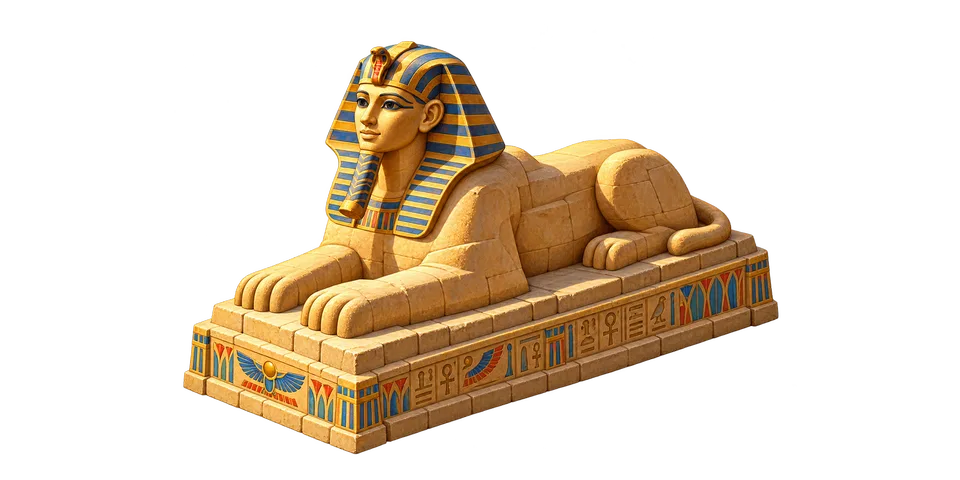 Great Sphinx
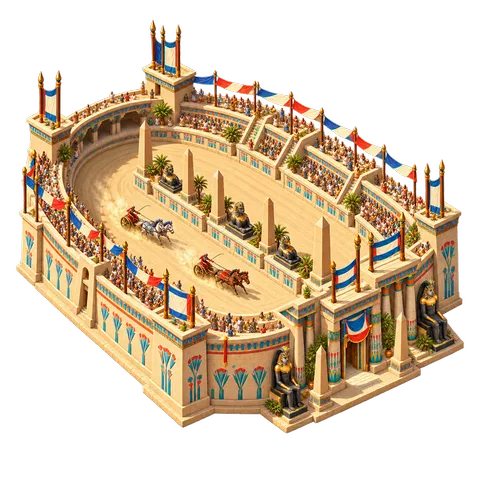 Chariot arena
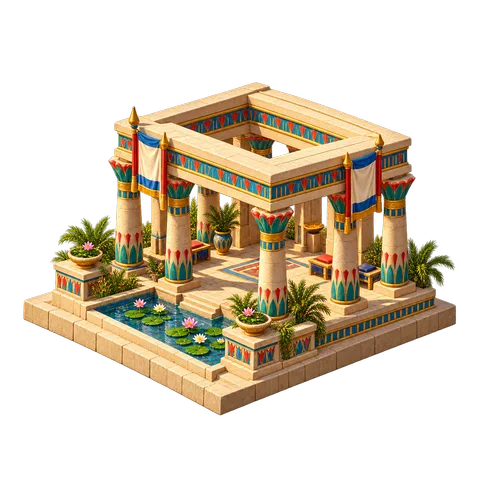 Temple kiosk
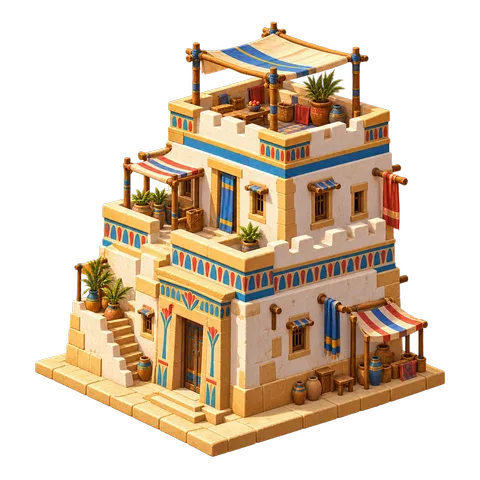 Town house
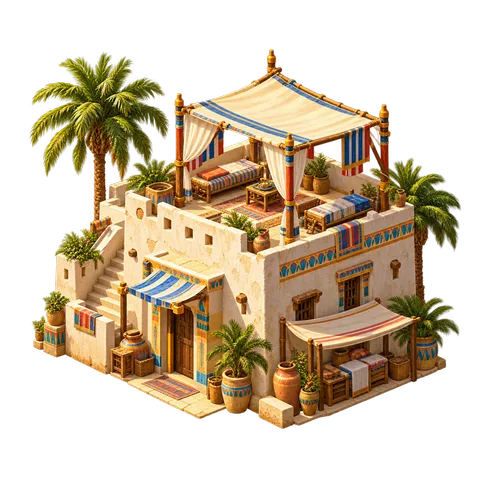 Rooftop house
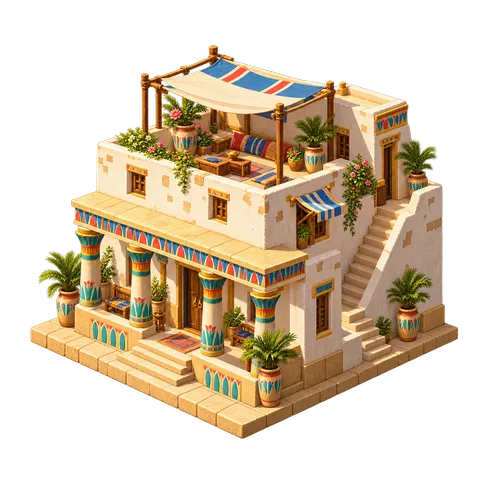 House with a porch
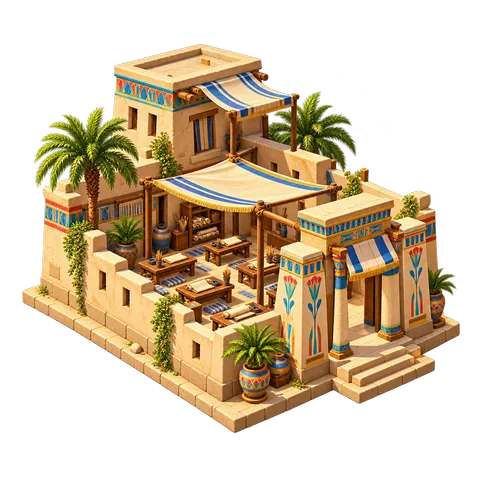 Scribe school
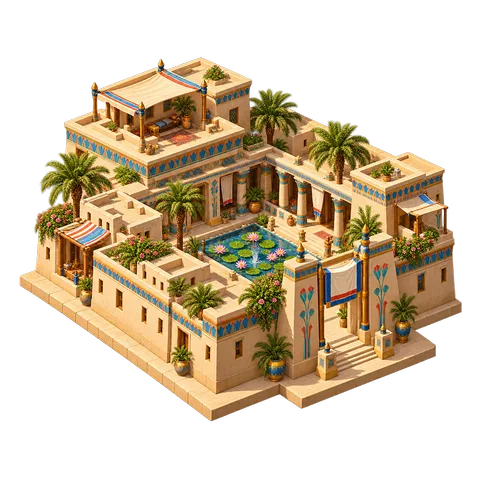 Courtyard villa
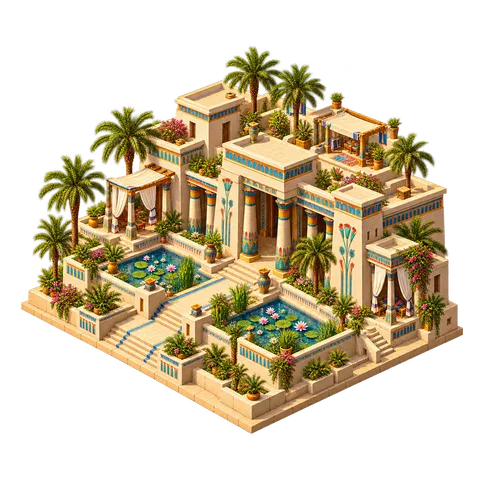 Garden villa
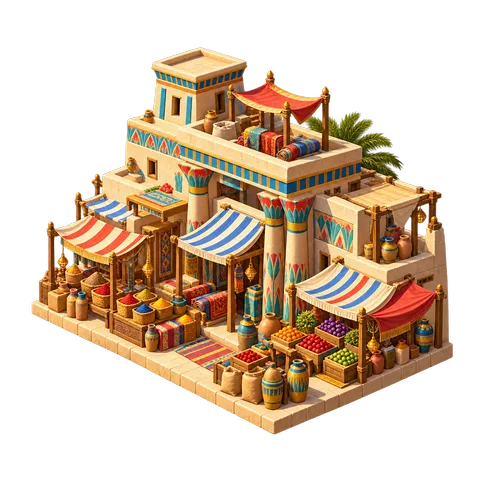 Market
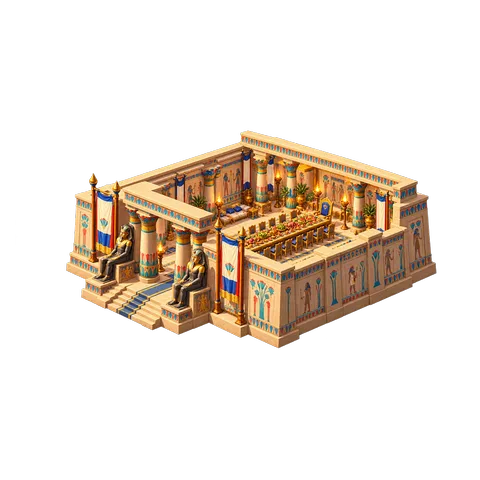 Feast hall
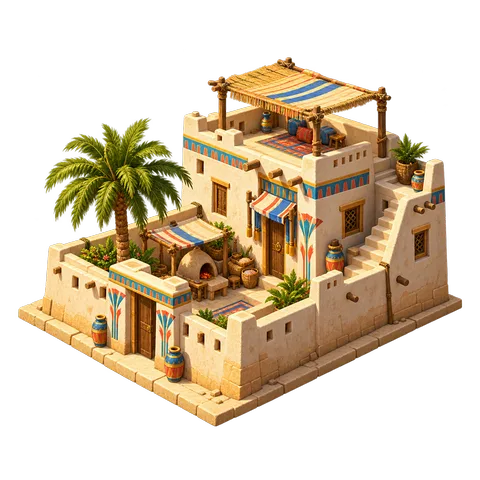 Village house
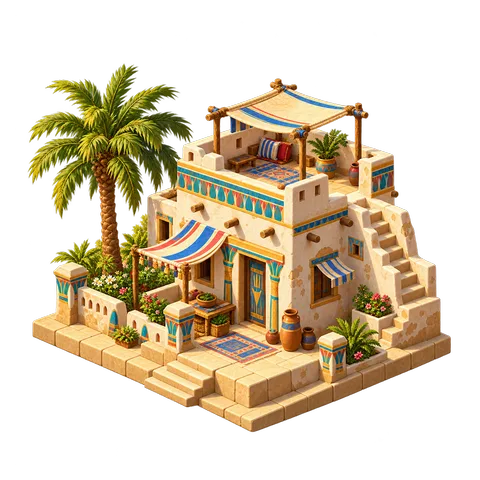 Family house
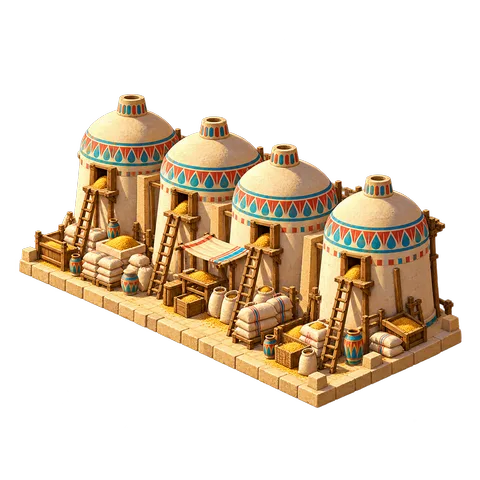 Granary
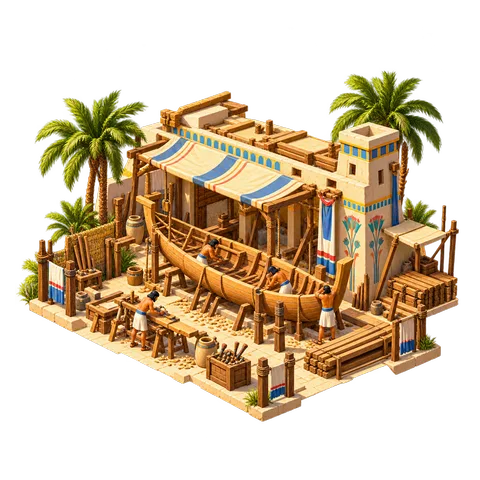 Boat workshop
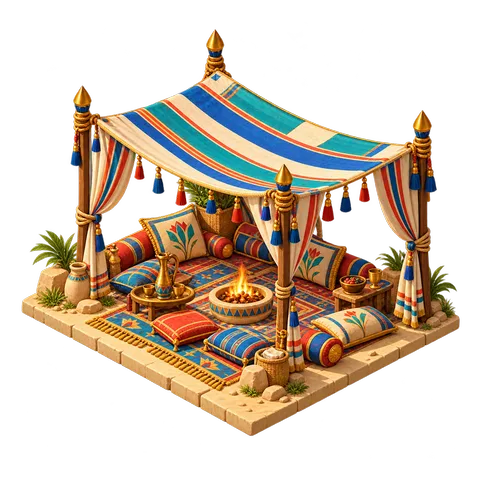 Desert camp
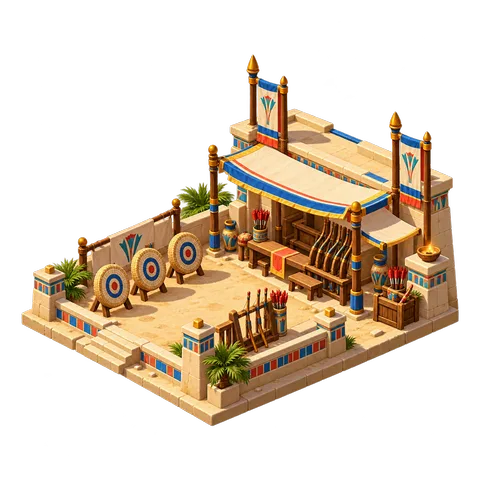 Archery range
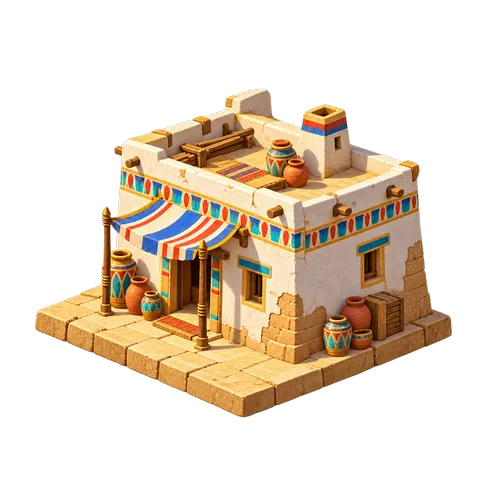 Mud-brick house
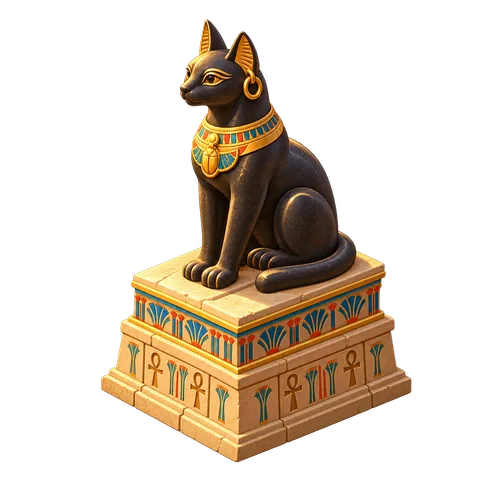 Cat statue
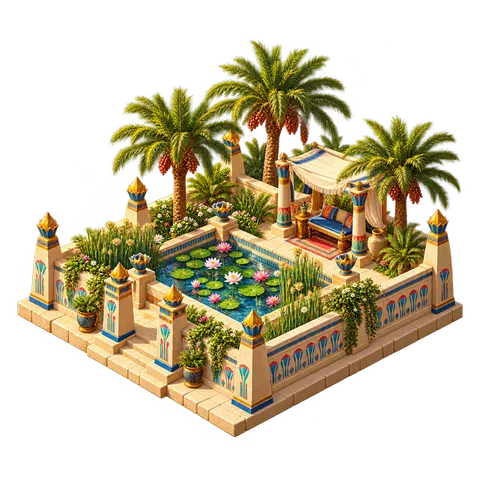 Lotus garden
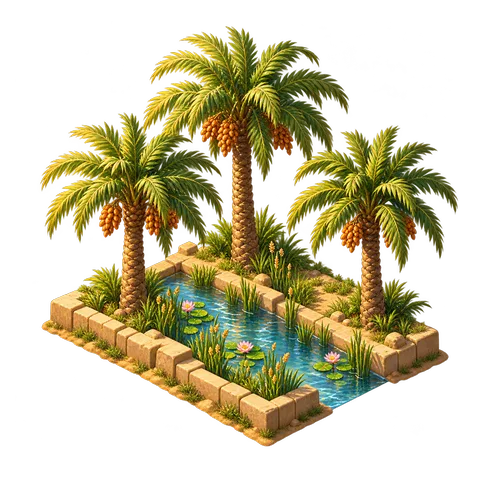 Palm grove
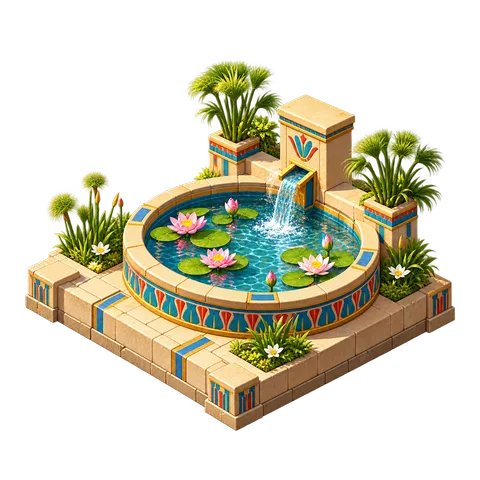 Lotus pool
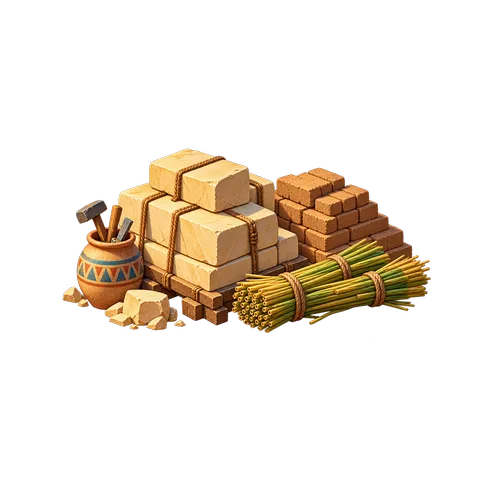 Building materials
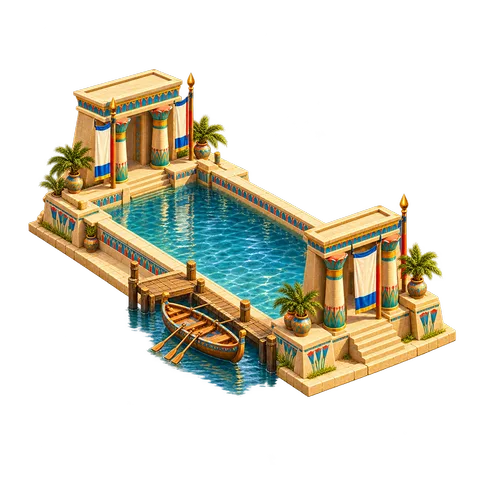 Rowing pool
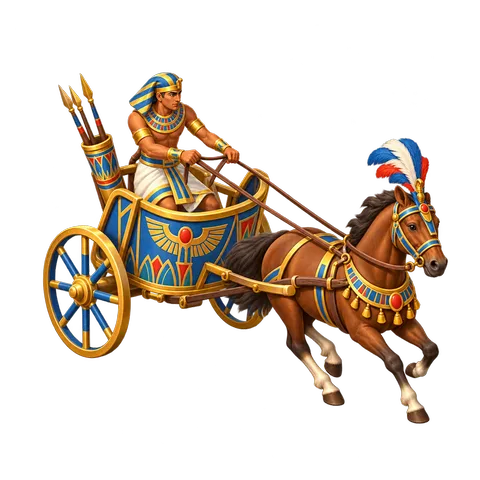 Chariot
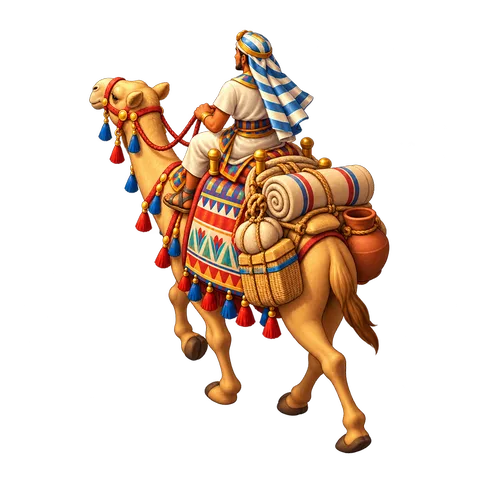 Camel rider
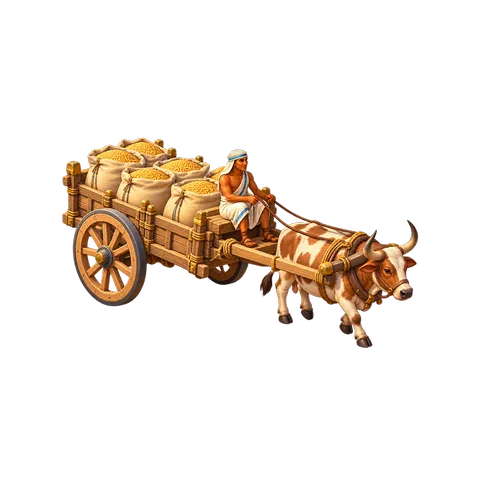 Ox cart
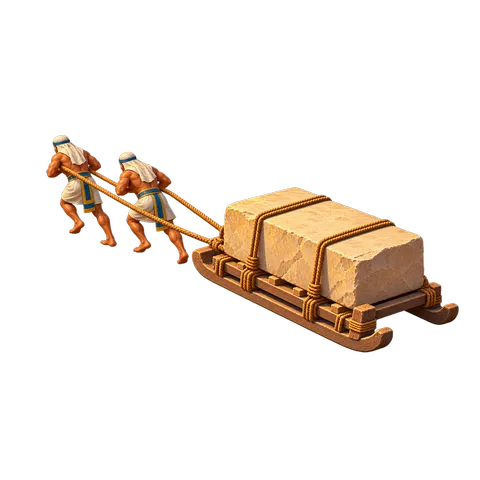 Stone sledge
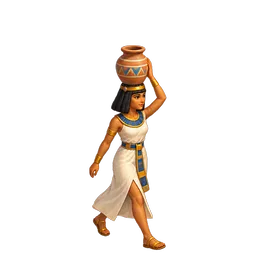 Water carrier
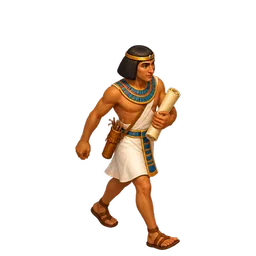 Scribe
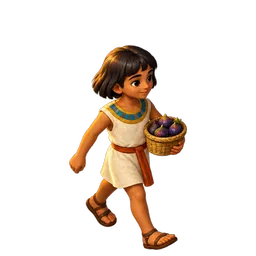 Child with figs
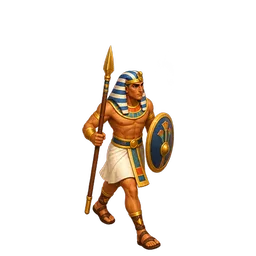 Palace guard
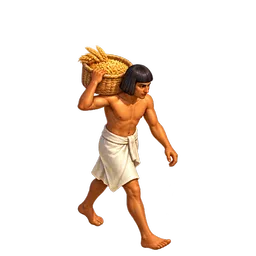 Farmer
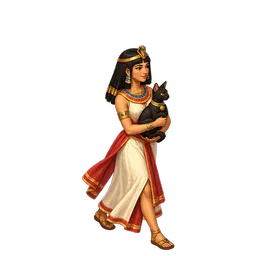 Woman with a cat
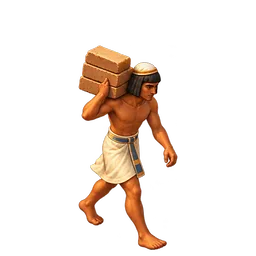 Brick carrier
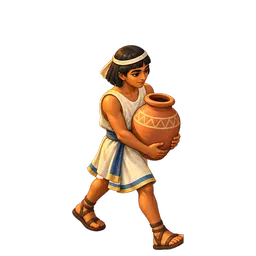 Young builder
Point at anything on the map to learn what it is.
The buildings are illustrations, not exact reconstructions. Each page separates what history tells us from what the artist imagined, and lists its sources.
All 41 places and vehicles
Pyramids and monuments
Giant monuments built to last forever.
- PyramidA giant stone tomb for a pharaoh. The Great Pyramid at Giza was the tallest building on Earth for about 3,800 years.
- Great SphinxA giant lion with the head of a king, carved out of the rock beside the pyramids of Giza about 4,500 years ago.
- ObeliskA tall, four-sided stone pillar with a pointed top, cut from a single piece of granite and set up in pairs at temple gates.
- Cat statueA statue of a sitting cat, the sacred animal of the goddess Bastet. Egyptians loved cats, which kept homes and granaries free of mice and snakes.
Pharaohs and temples
Where the king lived and ruled, and where the gods were honored.
- Pharaoh's palaceThe home and offices of the king. Egyptians called the palace per-aa, the "great house", and that word became our word "pharaoh".
- Royal treasuryWhere the kingdom's wealth was kept: gold and silver, but also grain, linen and oil collected as taxes.
- Temple gatewayTwo huge sloping towers with a doorway between them: the entrance to an Egyptian temple, called a pylon.
- Hall of columnsA great temple hall filled with giant painted columns, like the Great Hypostyle Hall at Karnak, which has 134 of them.
- Twin colossiTwo giant seated statues of a pharaoh, like the Colossi of Memnon, which have sat beside the Nile for about 3,400 years.
- Temple kioskAn open pavilion of columns where priests could rest a god's shrine during festivals, or travelers could stop by the river.
Writing and learning
Where scribes learned to write and knowledge was kept.
- Scribe schoolWhere boys, and a few girls, spent years learning to read and write so they could become scribes, the record keepers of Egypt.
- House of LifeA center of learning where scribes copied books and studied medicine, the stars and the calendar.
- Great LibraryThe most famous library of the ancient world, founded in Alexandria around 300 BC with the dream of collecting every book.
Food, work and trade
Markets, granaries, workshops and journeys that kept Egypt fed and busy.
- MarketStalls of food, cloth and pottery where people swapped goods. Egyptians bartered: they traded goods for goods instead of paying with coins.
- GranaryDomed mud-brick stores for grain. Full granaries meant bread and beer all year, and protection against a poor flood.
- Boat workshopA shipyard where carpenters built the wooden boats that carried people and goods along the Nile.
- Desert campA shaded camp for travelers crossing the desert to mines, quarries and faraway lands.
Gardens and the Nile
The river that gave Egypt life, and the gardens it watered.
- Lotus gardenA walled garden with a pool, palms and flowers: the kind of garden wealthy Egyptians loved and painted on their tomb walls.
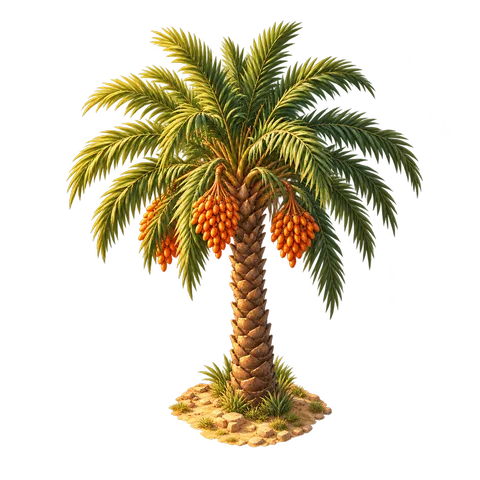
- Palm groveDate palms beside a water channel. Palms gave Egyptians sweet fruit, shade, rope, baskets and roof beams.
- Lotus poolA small pool of blue water lilies. The lotus, which opens each morning, stood for the sun and new life.
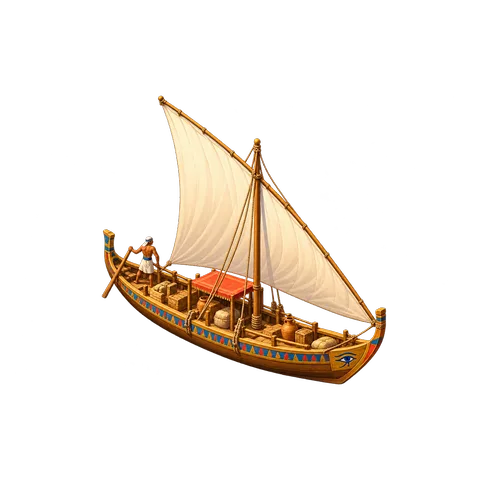 Nile sailing boatA wooden boat with a tall sail. On the Nile, boats sailed south with the wind and floated north with the current.
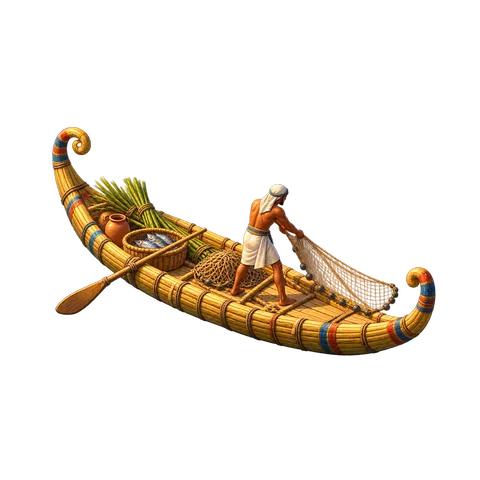 Papyrus boatA light boat made from bundles of papyrus reeds, used for fishing and hunting birds in the marshes.
Sports and feasts
Archery, rowing, chariots and banquets.
- Archery rangeA yard with straw targets where archers practiced. Egyptian kings boasted about their skill with the bow.
- Rowing poolA long pool with a wooden dock for rowing practice. On the Nile, rowing was a vital skill, and kings bragged about it.
- Chariot arenaAn imagined racing arena. Egyptians drove chariots in war, hunting and parades; races in a stadium came later, in Greek and Roman times.
- Feast hallA painted hall for banquets, with music, dancing, flowers and plenty to eat and drink.
Homes
How Egyptians lived, from village houses to villas with gardens.
- Mud-brick houseA small house of sun-dried mud brick: the home of most Egyptian farmers and workers.
- Town houseA tall house of two or three floors, built where towns were crowded and land was precious.
- Family houseA farming family's house with a palm tree, a little garden and stairs to the roof.
- House with a porchA two-story house with a columned porch, the kind of home a scribe or an official might have had.
- Village houseA house in a village like Deir el-Medina, home of the workers who dug and decorated the royal tombs in the Valley of the Kings.
- Courtyard villaA walled villa built around courtyards, with its own well, granaries and garden, like the houses of officials at Amarna.
- Garden villaA large villa with shady porches, palm gardens and lotus pools: a wealthy family's dream home.
- Rooftop houseA family house with a big canopy on the roof. Egyptians used their flat roofs for sleeping, working and drying food.
Building and defense
How Egyptians built in mud and stone, and kept watch on their borders.
- WatchtowerA slim lookout tower. Egypt guarded its borders with forts and watchposts, especially in the south, toward Nubia.
- Lifting leverA wooden lever with a counterweight, like the shaduf Egyptians used to lift water. Builders moved giant stones with levers, ramps and sledges.
- Building materialsSandstone blocks, mud bricks, reeds and copper tools: what Egyptians built with.
Vehicles and getting around
How people and goods move around the city.
- ChariotA light two-wheeled chariot pulled by horses: the fastest way to travel in Egypt after about 1600 BC.
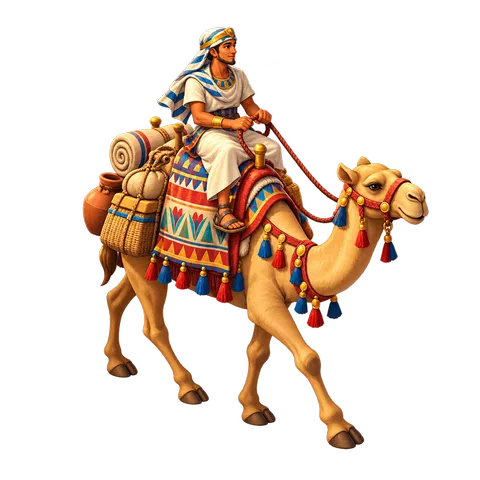 Camel riderA camel with a rider and colorful saddle bags. Camels are perfect for deserts, but they came to Egypt late: for most of its history, donkeys carried the loads.
- Ox cartAn ox pulling a cart loaded with grain. Wheels came late to Egypt; oxen mostly plowed fields and pulled sledges.
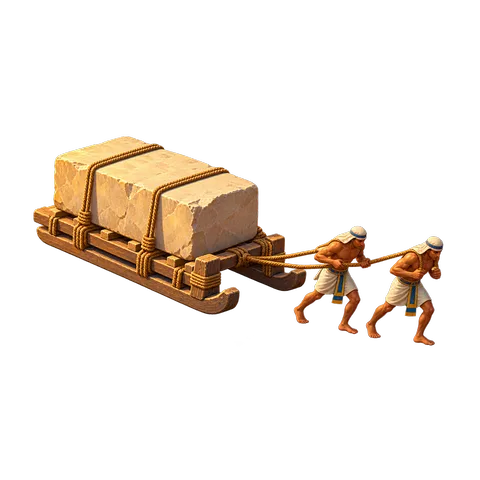 Stone sledgeWorkers dragging a stone block on a wooden sledge, the way Egyptians moved heavy loads over land.
Keep exploring
Compare all six worlds See all Ancient Egypt artwork
Games with this world: Map hunt · World sort · Shadow match · Picture puzzle