History Where knowledge lived
Big temples had a House of Life, where learned priests and scribes copied and kept important texts: prayers, rituals, medical knowledge and records of the stars. Students trained there too. Scholars still debate exactly what it was: some call it a library, others an academy with a library inside it.
Egyptian medicine was famous in the ancient world. The Ebers Papyrus, written around 1550 BC, lists about 700 remedies, for everything from burns and toothache to crocodile bites.
History A school found in 2025
In 2025, Egyptian archaeologists announced that they had found a House of Life at the Ramesseum, the memorial temple of Ramesses II at Luxor. Among the finds were students' drawings and pieces of school equipment, showing that teaching went on right next to the temple.
Art In this artwork
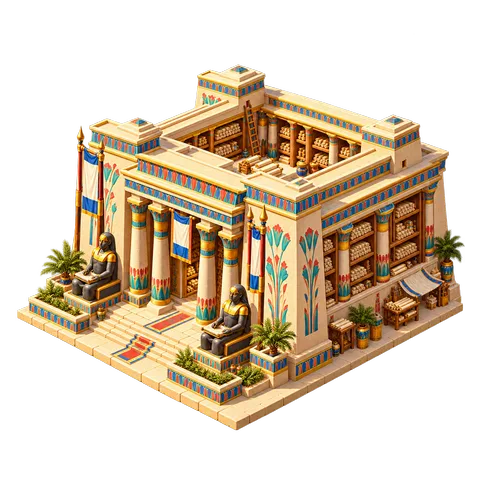
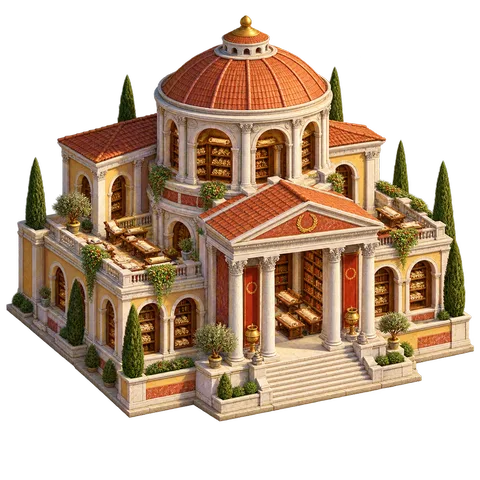
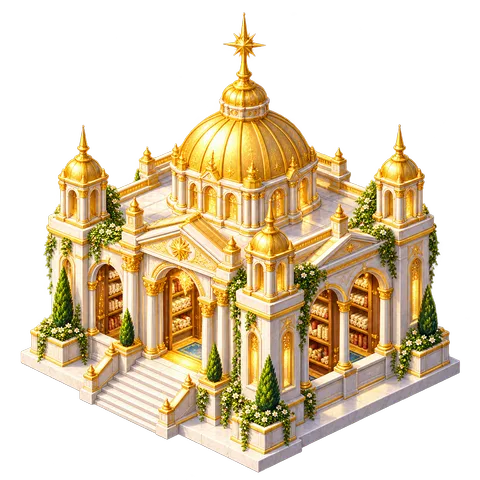
The illustration shows a two-story sandstone hall with columns, a rooftop terrace and shelves of scrolls. Real Houses of Life stood inside temple grounds and were mostly built of mud brick.
Look closer
- Find the shelves of scrolls.
- Where could people study in the fresh air?
Think about it
- Why might a temple want a place for books and learning?
- How was knowledge kept before printing?
- Where is knowledge kept in your town?
Key words
- Scroll
- A long roll of papyrus with writing on it.
- Remedy
- A medicine or treatment.
- Ritual
- A ceremony done in a set way.
Sources
The history on this page is a short summary based on these sources:
- World History Encyclopedia, "House of Life"
- Katharina Zinn, "Libraries, Pharaonic Egypt", The Encyclopedia of Ancient History (2013)
- Egyptian Ministry of Tourism and Antiquities, announcement of a House of Life found at the Ramesseum, Luxor (2025)
- Encyclopaedia Britannica, "Papyrus"