History Every book in the world
In 332 BC, Alexander the Great conquered Egypt and founded the city of Alexandria on the Mediterranean coast. After his death, his general Ptolemy became king, and his family ruled Egypt for nearly 300 years. The first Ptolemies built the Library as part of the Mouseion, a place where scholars lived and worked.
The kings wanted a copy of every book. An ancient story says that books found on ships in Alexandria's harbor were taken and copied, and the owners were given the copies. The scholar Eratosthenes, who led the Library, used the shadows cast by the sun to work out the size of the Earth around 240 BC, and came remarkably close.
History How it ended
The Library did not vanish in a single fire. A fire during Julius Caesar's war in Alexandria in 48 BC may have burned some books, but the Library declined slowly over centuries, as money ran out and scholars left. In 2002, Egypt opened a new library in Alexandria, the Bibliotheca Alexandrina, in its honor.
Art In this artwork
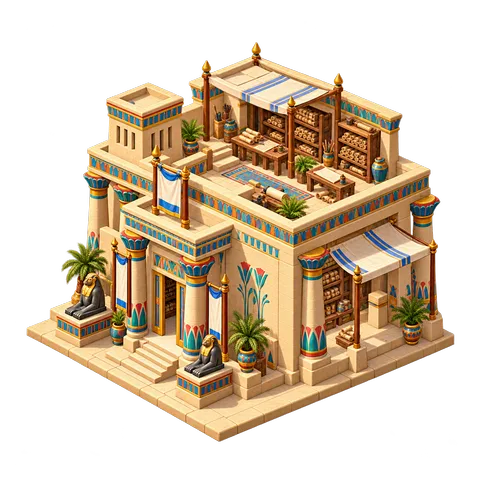
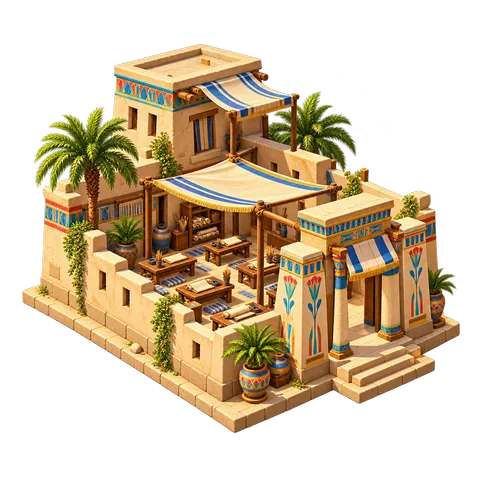
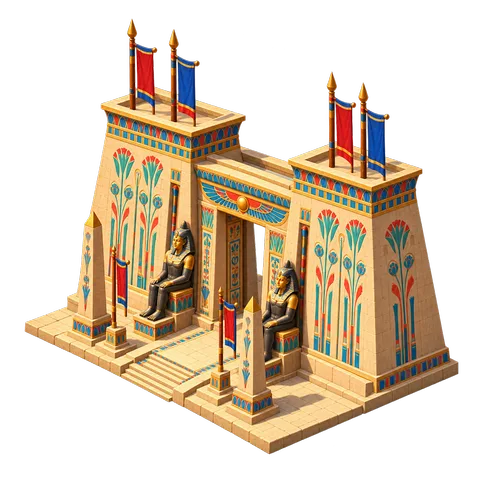
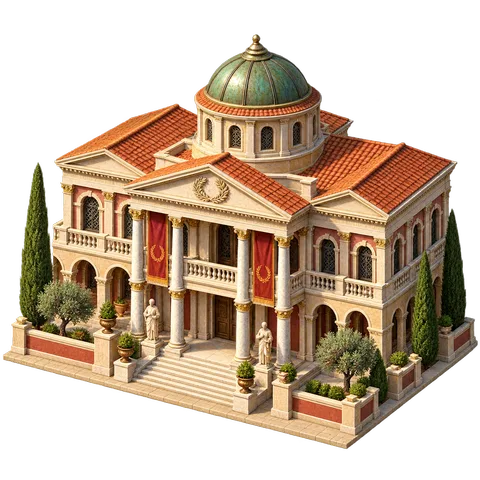
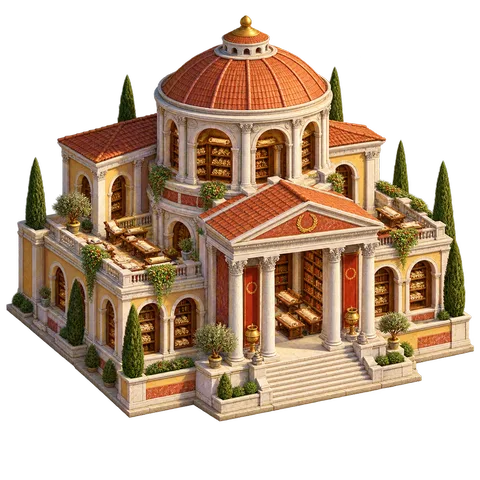
The illustration shows a grand sandstone library in the old Egyptian style, with scroll shelves and statues of seated scribes. The real Library stood in a Greek-style city, and no one knows exactly what it looked like.
Look closer
- Find the statues of seated scribes.
- Look for the shelves of scrolls in the walls.
Think about it
- Why might a king want a copy of every book?
- What would be lost if a big library disappeared?
- How do libraries today keep their books safe?
Key words
- Mouseion
- A Greek "home of the Muses", a place of study and the origin of the word museum.
- Scholar
- A person who studies a subject deeply.
- Circumference
- The distance all the way around a circle or sphere.
Sources
The history on this page is a short summary based on these sources:
- Encyclopaedia Britannica, "Library of Alexandria"
- Encyclopaedia Britannica, "Eratosthenes"
- Ian Shaw (editor), The Oxford History of Ancient Egypt (2000)