History The tomb builders' village
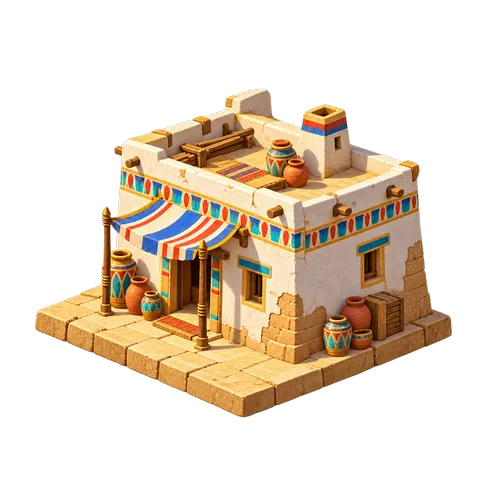
The skilled workers who dug and decorated the royal tombs, such as stonecutters, plasterers, painters and scribes, lived with their families in a walled village called Deir el-Medina. Its houses stood in rows along a narrow street, with a front room, a living room, back rooms and a kitchen, and stairs to the roof, where people slept on hot nights. Water had to be carried up to the village by donkey.
History Notes that survive
Many villagers could read and write, and thousands of their notes survive on pieces of pottery and stone: letters, laundry lists, loans and school exercises. A list of workers even gives reasons for missing work, such as a scorpion sting or brewing beer.
Around 1157 BC, when the workers' grain was not delivered on time, they stopped work and sat down by the temples in protest. It is the first strike known in history.
Art In this artwork
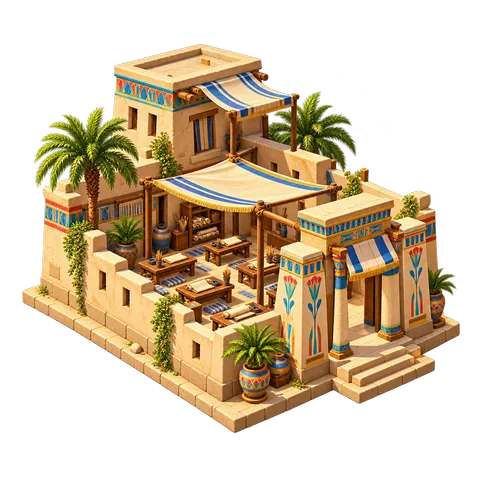
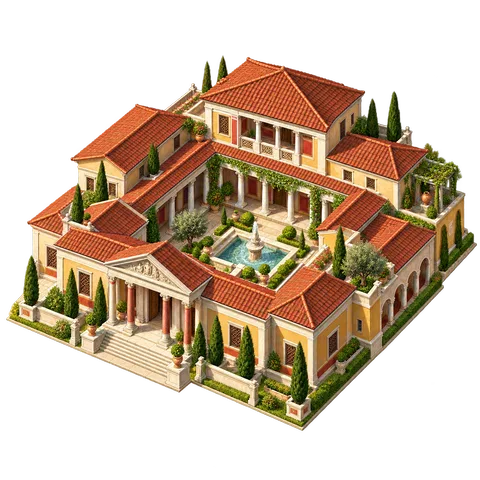
The illustration shows a mud-brick family house with a courtyard, a palm tree, a clay oven and a rooftop awning.
Look closer
- Find the clay oven.
- Where would the family sleep on hot nights?
Think about it
- Why would the tomb builders live in their own village?
- What can everyday notes tell us that monuments cannot?
- Why might workers go on strike?
Key words
- Strike
- When workers stop working to protest.
- Ostracon
- A piece of pottery or stone used for writing.
- Ration
- A fixed amount of food given out regularly.
Use it in class
- What was daily life like in ancient Egypt? (Explainer, grades 3-8)
Sources
The history on this page is a short summary based on these sources:
- World History Encyclopedia, "Deir el-Medina"
- The Turin Strike Papyrus (about 1157 BC), records of the workers of Deir el-Medina
- UNESCO World Heritage Centre, "Ancient Thebes with its Necropolis"
- Ian Shaw (editor), The Oxford History of Ancient Egypt (2000)