History Chariots come to Egypt
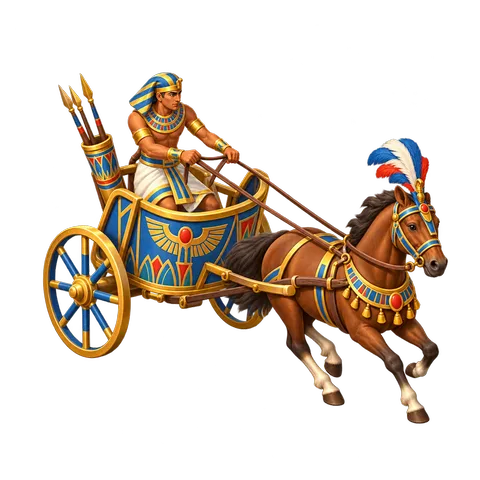
Light two-wheeled chariots pulled by horses reached Egypt around 1600 BC, probably with the Hyksos, rulers from western Asia who took over the north of the country. Egyptian kings soon built huge chariot forces. At the Battle of Kadesh in 1274 BC, Ramesses II fought the Hittites in one of the largest chariot battles ever recorded.
History Racing came later
No racing arena has been found from the time of the pharaohs. Chariot racing in a stadium arrived with the Greeks: after Alexander the Great, the Ptolemy kings built a hippodrome, or racetrack, at Alexandria. The Romans, who ruled Egypt after 30 BC, loved chariot racing too.
History A prince who loved horses
Horses were costly, and only kings, nobles and the army kept them. The stone slab that King Amenhotep II set up near the Great Sphinx says that as a young prince he cared for his father's horses at Memphis and trained them so well that they never tired.
Art In this artwork
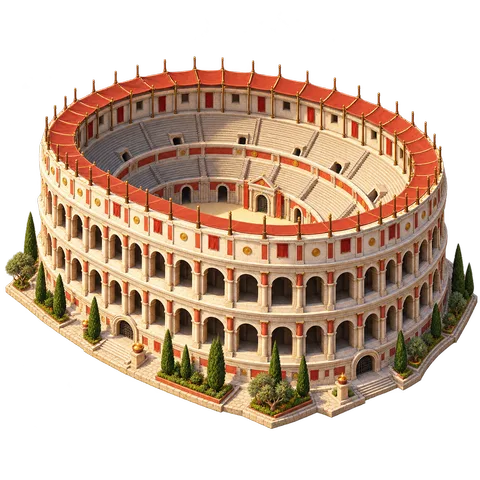
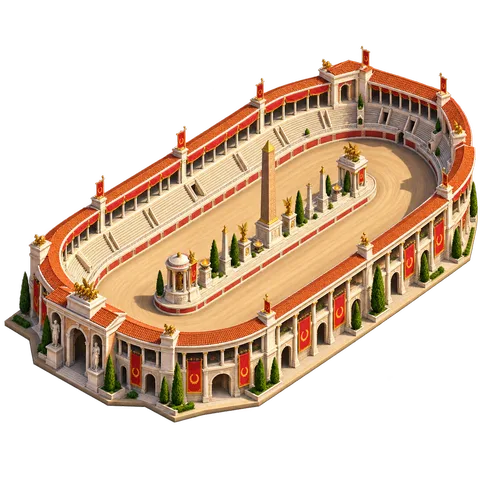
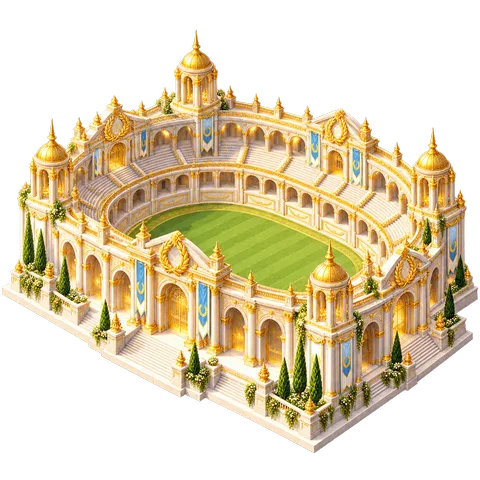
The oval arena with seats, banners and two racing chariots is imagined. It mixes Egyptian decoration with the kind of racetrack that Greeks and Romans built.
Look closer
- Find the two chariots on the track.
- Where would the crowd sit?
Think about it
- How might the arrival of horses and chariots have changed Egypt?
- Why do you think racing became so popular in later times?
- What do people race today?
Key words
- Chariot
- A light two-wheeled vehicle pulled by horses.
- Hippodrome
- A Greek racetrack for horses and chariots.
- Hyksos
- Rulers from western Asia who controlled northern Egypt around 1650 to 1550 BC.
Sources
The history on this page is a short summary based on these sources:
- Encyclopaedia Britannica, "Chariot"
- Griffith Institute, University of Oxford, Howard Carter's records of the tomb of Tutankhamun
- Stela of Amenhotep II near the Great Sphinx, about 1420 BC (his feats of archery and rowing)
- Encyclopaedia Britannica, "Library of Alexandria"
- Ian Shaw (editor), The Oxford History of Ancient Egypt (2000)