History Flower of the sun
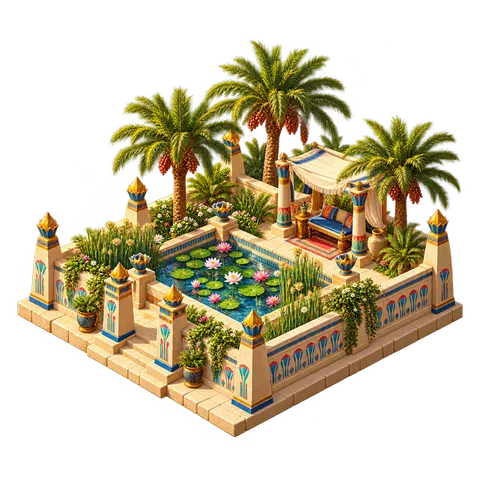
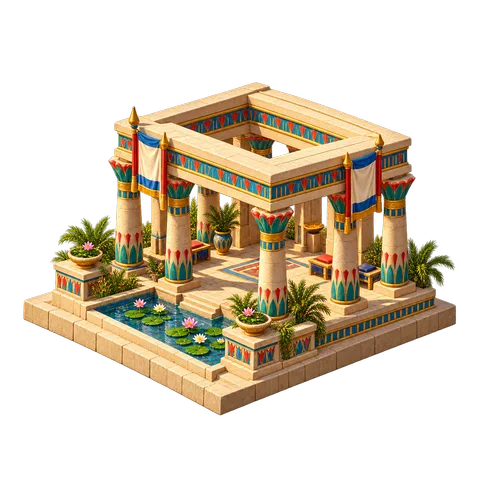
The blue water lily opens in the morning and closes at night. Egyptians linked it with the sun and with creation: one story told that the young sun god rose from a lotus flower at the beginning of the world. Lotus flowers were carved on columns, painted on walls, worn at feasts and used to make perfume.
History Sacred lakes
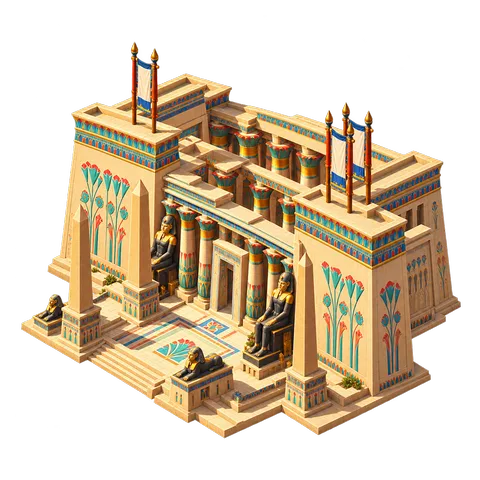
Temples had stone-lined lakes, fed by water seeping up from the ground. Priests washed in them before ceremonies, because they had to be pure to serve the gods. The sacred lake at Karnak, about 120 meters long, can still be seen today.
History A king in a flower
Among the treasures from the tomb of Tutankhamun is a painted wooden head of the young king rising out of a blue lotus flower, like the sun god at the beginning of the world. It is one of the best-known pieces from his tomb.
Art In this artwork
The little spout of water is the artist's touch: Egyptian garden pools held still water, not fountains.
Look closer
- Find the lotus flowers.
- Where does the water come from?
Think about it
- Why might people link a flower that opens each morning with the sun?
- Why would priests need to wash before a ceremony?
- What flowers are special in your culture?
Key words
- Lotus
- The blue water lily of the Nile.
- Sacred
- Holy, set apart for the gods.
- Rebirth
- Being born again into new life.
Sources
The history on this page is a short summary based on these sources:
- Encyclopaedia Britannica, "Karnak"
- Richard H. Wilkinson, The Complete Temples of Ancient Egypt (2000)
- British Museum, paintings from the tomb-chapel of Nebamun (garden pool, banquet and marsh hunt)
- Griffith Institute, University of Oxford, Howard Carter's records of the tomb of Tutankhamun