History The great house
The Egyptian word for the palace was per-aa, meaning "great house". In time people began to use it for the king himself, much as people say "the White House" to mean the president. Through Hebrew and Greek, per-aa became our word "pharaoh".
Temples and tombs were built of stone to last forever, but palaces were built of mud brick, like ordinary houses only far grander. Because of this, few palaces survive.
History Palaces that survive
King Amenhotep III built a palace city called Malkata on the west bank at Thebes around 1360 BC, with halls, apartments, kitchens, workshops and a large man-made harbor. Its plaster floors and ceilings were painted with marsh plants, birds and fish. At Amarna, the city of his son Akhenaten, archaeologists found painted palace floors showing ducks flying up from thickets of papyrus.
Art In this artwork
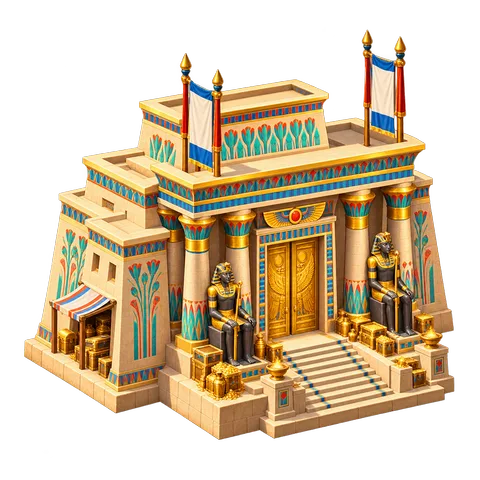
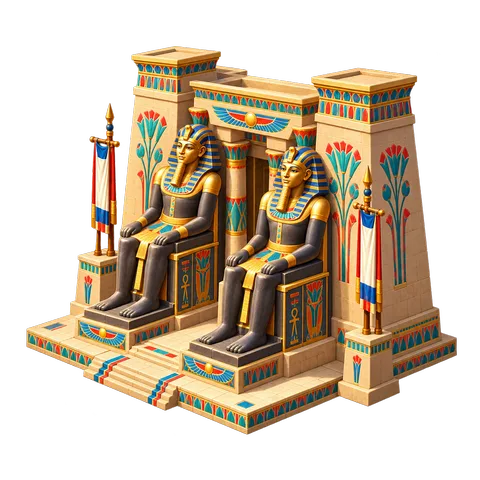
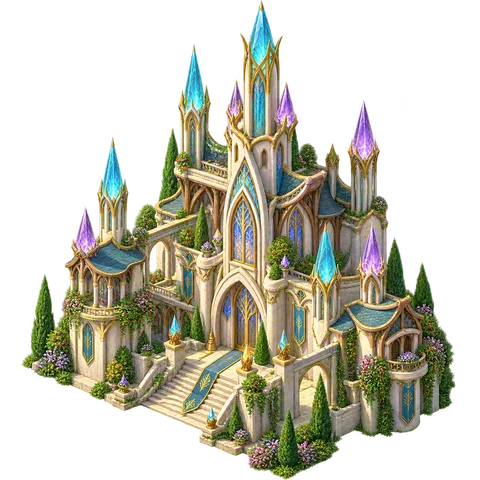
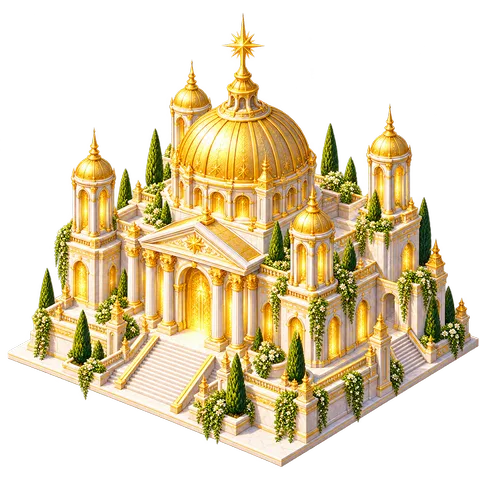
The illustration shows a stone palace with lotus columns, blue and gold banners and two sphinxes by the steps. Real palaces were mostly mud brick and plaster, painted in bright colors.
Look closer
- Find the two sphinx statues.
- Look at the banners. What colors are they?
Think about it
- Why might palaces be built of mud brick, but temples of stone?
- What can a building's name tell us about who uses it?
- What would a ruler need in a palace besides a home?
Key words
- Pharaoh
- A king of ancient Egypt.
- Plaster
- A smooth paste spread on walls that dries hard.
- Harbor
- A sheltered place where boats can stop.
Sources
The history on this page is a short summary based on these sources:
- Encyclopaedia Britannica, "Ancient Egypt"
- Encyclopaedia Britannica, "Tell el-Amarna"
- Barry Kemp, The City of Akhenaten and Nefertiti: Amarna and Its People (2012)
- UNESCO World Heritage Centre, "Ancient Thebes with its Necropolis"