History A party in a painting
Tomb paintings show lively banquets: guests seated on chairs and mats, servants bringing food and drink, musicians playing harps and flutes, and dancers. Banquet scenes from the tomb of Nebamun, painted around 1350 BC and now in the British Museum, even show the guests chatting and offering each other flowers.
History Cones on their heads
In many paintings, guests wear small cones on top of their heads. For a long time people guessed they were lumps of scented fat. In 2019, archaeologists described two real cones made of wax, found in graves at Amarna, the first proof that they existed. What they were for is still a mystery.
History Songs at the party
Musicians played harps, lutes, flutes and drums while singers clapped the beat. Some paintings show a blind harpist, and the words of harpers' songs survive. They tell guests to enjoy the day, put on perfume and fine linen, and be happy while they can.
Art In this artwork
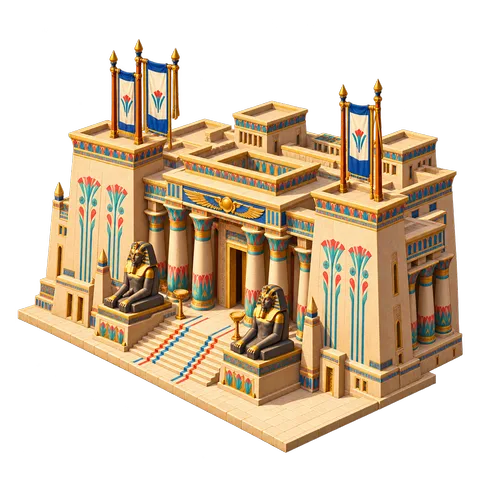
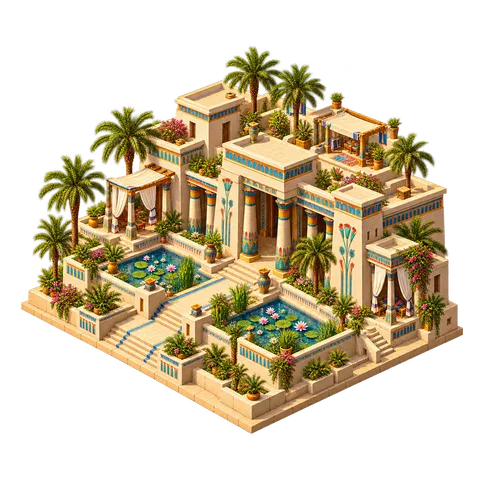
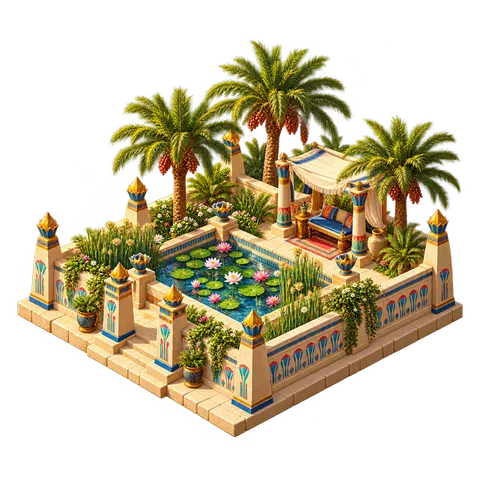
The illustration shows a columned hall with painted walls, banners and a long table set for a feast. Egyptian guests more often sat on chairs or mats with small tables of food.
Look closer
- Find the long table.
- What decorations can you see on the walls?
Think about it
- What does a feast tell us about the people who held it?
- Why might people paint party scenes in a tomb?
- How do people celebrate together where you live?
Key words
- Banquet
- A large, special meal for many guests.
- Lute
- A stringed instrument with a long neck.
- Linen
- A light cloth made from the flax plant.
Sources
The history on this page is a short summary based on these sources:
- British Museum, paintings from the tomb-chapel of Nebamun (garden pool, banquet and marsh hunt)
- Anna Stevens and colleagues, "From representation to reality: ancient Egyptian wax head cones from Amarna", Antiquity (2019)
- Ian Shaw (editor), The Oxford History of Ancient Egypt (2000)