History A garden in the desert
Egypt hardly ever gets rain, so every garden had to be watered by hand. Wealthy households built walled gardens around a rectangular pool with fish, ducks and lotus flowers, shaded by palms and fig trees. A painting from the tomb of an official named Nebamun, now in the British Museum, shows such a garden: the pool seen from above, and the trees around it seen from the side.
History Gardens for the gods
Temples had gardens too, growing flowers and vegetables for offerings. At Deir el-Bahari, Queen Hatshepsut planted incense trees brought back from the land of Punt, and archaeologists have found the pits where their roots once grew.
History Flowers for a funeral
Flowers mattered at parties and at funerals. Collars made of real olive leaves, cornflowers, berries and blue beads, probably worn at the funeral feast of Tutankhamun, were buried in jars near his tomb. They survived for more than 3,300 years, and some are now in the Metropolitan Museum of Art in New York.
Art In this artwork
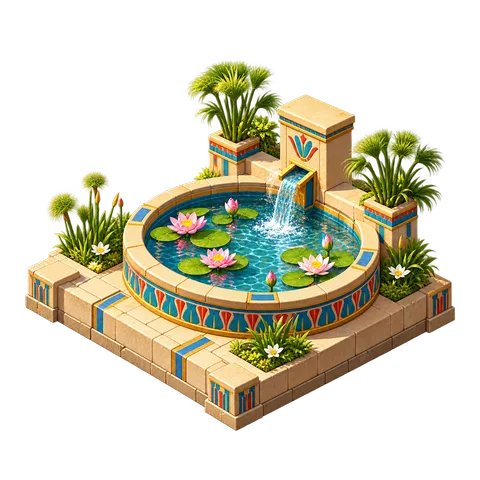
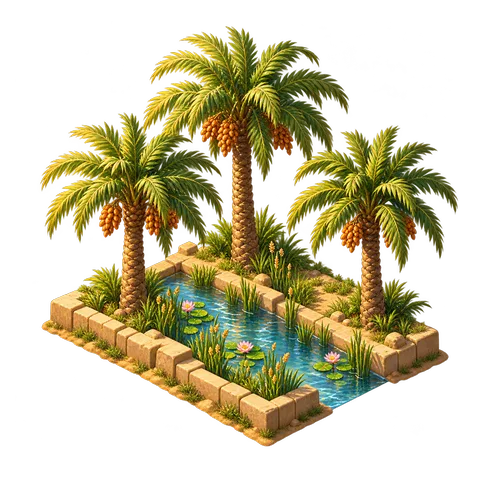
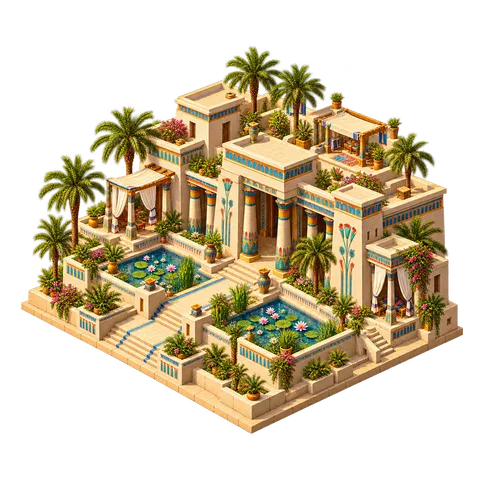
The illustration shows a walled garden with a lotus pool, papyrus reeds, date palms and a shaded seat, very like the gardens in Egyptian paintings.
Look closer
- Find the lotus flowers in the pool.
- Where could you sit in the shade?
Think about it
- Why would a garden be so precious in a dry land?
- What would you plant in a garden with very little water?
- How do gardens make people feel?
Key words
- Lotus
- The blue water lily of the Nile.
- Shaduf
- A pole with a bucket and a weight, for lifting water.
- Frankincense
- A sweet-smelling tree resin, burned as incense.
Sources
The history on this page is a short summary based on these sources:
- British Museum, paintings from the tomb-chapel of Nebamun (garden pool, banquet and marsh hunt)
- Encyclopaedia Britannica, "Hatshepsut"
- Encyclopaedia Britannica, "Shaduf"
- The Metropolitan Museum of Art, floral collars from Tutankhamun's embalming cache