History Wealth without coins
For almost all of its history, Egypt had no coins. Taxes were paid in goods: grain from the harvest, cattle, linen, oil and honey. Officials measured the fields after each flood to work out what every farm owed. The treasury collected these goods, stored them and paid them out as wages to workers, soldiers and officials.
To compare the value of different things, Egyptians used weights of copper, silver or gold. A goat might be worth a certain weight of copper, which could then be swapped for so many sacks of grain.
History Gold of the gods
Egypt was rich in gold, which came from mines in the eastern desert and in Nubia, to the south. Gold was linked to the sun and was thought of as the flesh of the gods. Foreign kings wrote to the pharaoh asking for gold; one of these letters, found at Amarna, says that in Egypt gold was "as plentiful as dust".
Art In this artwork
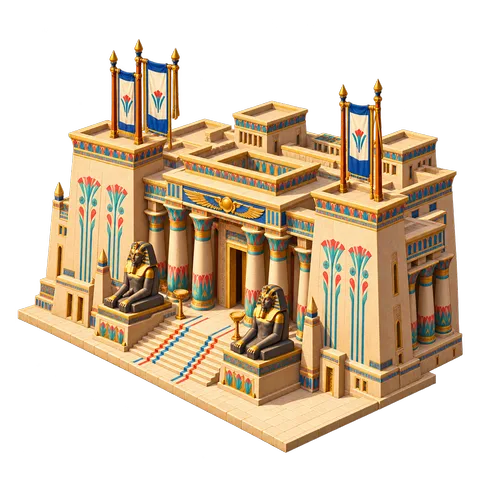
The illustration shows a sandstone hall with gold doors, guard statues and chests of gold on the steps. Real treasuries were storehouses for goods of every kind, not just gold.
Look closer
- Find the chests of gold.
- Look at the guard statues by the door.
Think about it
- How would you run a country without money?
- Why might a farmer's tax depend on the height of the flood?
- What does your town pay for with taxes today?
Key words
- Tax
- A payment people make to the government.
- Deben
- An Egyptian weight, about 91 grams, used to measure value.
- Wages
- Payment for work.
Sources
The history on this page is a short summary based on these sources:
- Encyclopaedia Britannica, "Ancient Egypt"
- Ian Shaw (editor), The Oxford History of Ancient Egypt (2000)
- The Amarna letters (about 1360 to 1335 BC), letters between the pharaohs and foreign rulers