History What it was
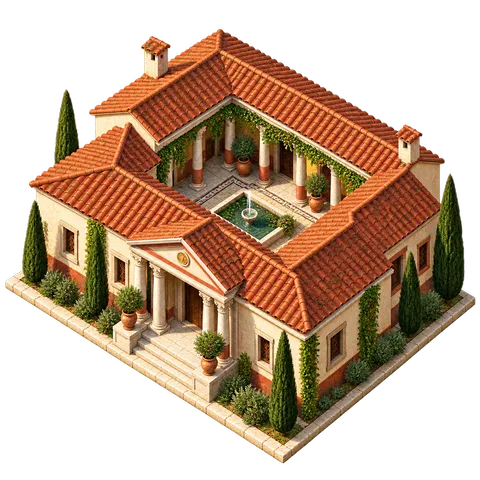
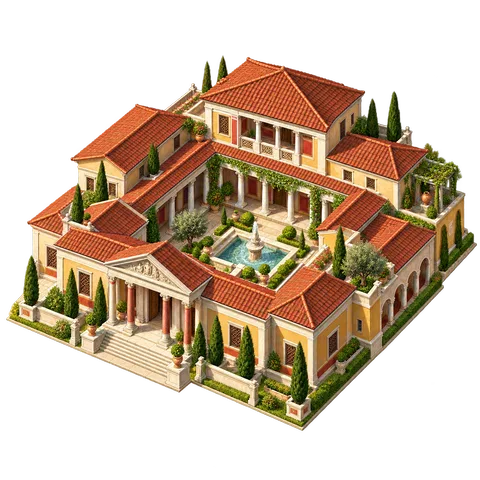
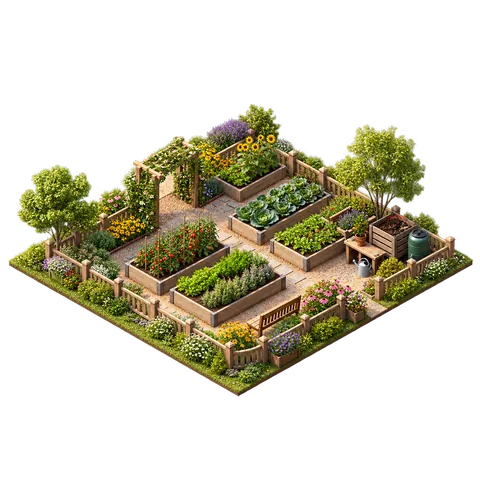
Many Roman homes had a garden at their center. In larger houses it was surrounded by a colonnade, a covered walkway on columns, forming a peristyle. Smaller homes might have a simple yard for vegetables and herbs, called a hortus.
History What grew there
Gardens mixed beauty and usefulness: shady trees, flowers such as roses and violets, herbs for cooking and medicine, and vegetables. Owners added fountains, pools, statues and painted walls showing even more plants and birds, making small gardens feel bigger.
In Pompeii, the archaeologist Wilhelmina Jashemski studied gardens by filling the holes left by ancient roots with plaster, then identifying the plants from the casts. Her work showed how carefully gardens were planned.
History Places you can still see
The House of the Vettii in Pompeii has a replanted peristyle garden with its fountains and statues. In Rome's Palazzo Massimo museum, a whole room of wall paintings from the villa of Livia, wife of Augustus, shows a lush garden full of trees, flowers and birds. In England, Fishbourne Roman Palace has a replanted formal garden.
Art In this artwork
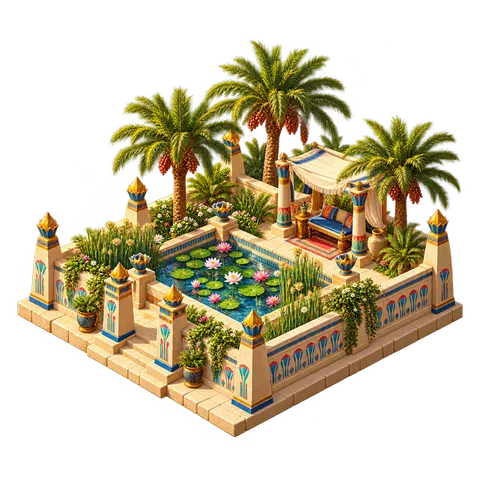
This garden courtyard is an illustration of a peristyle garden. The plants and fountain layout are the artist's own.
Look closer
- Find the fountain and the paths.
- Notice the covered walkway around the edge.
Think about it
- How could gardens collect and use rainwater?
- Why might city people want a garden at home?
- What plants would you grow, and why?
Key words
- Peristyle
- A garden surrounded by a colonnade.
- Hortus
- A garden, often for vegetables and herbs.
- Fresco
- A painting made on fresh, wet plaster.
Sources
The history on this page is a short summary based on these sources:
- Smarthistory, "Roman domestic architecture: the domus"
- UNESCO World Heritage Centre, "Archaeological Areas of Pompei, Herculaneum and Torre Annunziata"