History What it was
Wealthy Romans often owned houses outside the city, by the sea or in the hills. These villas were places for rest and leisure, which Romans called otium. They could be very large, with gardens, pools, private baths and rooms with views.
Some villas were also working farms, but the grandest were built mainly for pleasure.
History Life at a villa
The writer Pliny the Younger described one of his villas near the sea in a letter. He wrote about rooms planned to catch the winter sun or the summer breeze, a dining room looking out over the waves, a library and gardens. Owners invited friends to stay, read, write, hunt and enjoy long dinners.
Villas were run by large staffs of servants and enslaved workers who lived on the property.
History Places you can still see
Hadrian's Villa at Tivoli, near Rome, built for the emperor Hadrian in the 2nd century AD, is a huge complex of palaces, baths, theaters and pools. The Villa Romana del Casale in Sicily is famous for its colorful floor mosaics. Near Pompeii, the Villa of the Mysteries is known for its brilliant red wall paintings.
Art In this artwork
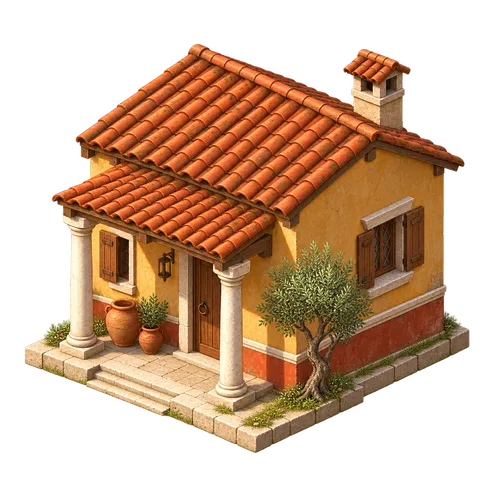
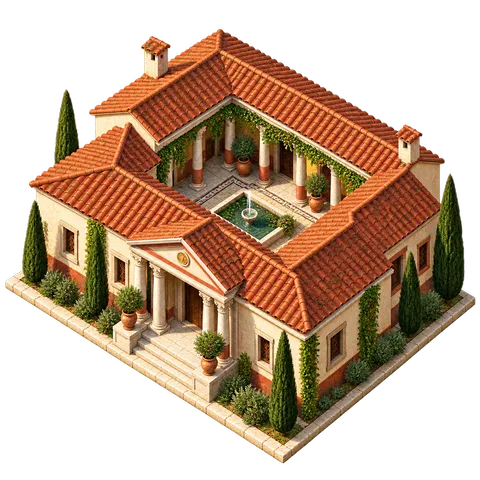
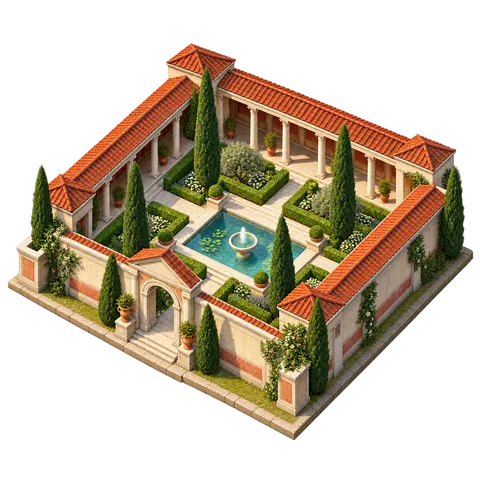
This villa is an illustration combining features found in many villas, not a specific site.
Look closer
- Find the pools and gardens.
- How many separate wings can you count?
Think about it
- Why might people want a second home away from the city?
- Who did the work to keep a villa running?
- What makes a place feel restful?
Key words
- Villa
- A country house.
- Otium
- Leisure time for rest, reading and thinking.
- Mosaic
- A picture made of small colored stones or glass.
Sources
The history on this page is a short summary based on these sources:
- Smarthistory, "The villa" and "A virtual tour of Hadrian's Villa"
- Pliny the Younger, Letters, Book 2, Letter 17 (his villa at Laurentum)
- UNESCO World Heritage Centre, "Villa Adriana (Tivoli)"
- UNESCO World Heritage Centre, "Villa Romana del Casale"