Possible future How it would work
Plants take in carbon dioxide and release oxygen, and they can turn waste into food when combined with composting and microbes. A greenhouse dome would combine growing beds, fish tanks or algae and recycling systems into a living life support system, cutting the need for supplies from Earth.
Real world Lessons from Biosphere 2
From 1991 to 1993, eight people lived sealed inside Biosphere 2, a huge glass-and-steel complex in Arizona with a rainforest, ocean, desert and farm. It taught scientists a lot, partly through problems: oxygen levels fell over time, partly because microbes in the rich soil used it up and the concrete absorbed carbon dioxide, and extra oxygen had to be pumped in. Growing enough food was hard work.
Real world Research today
The European Space Agency's MELiSSA project is studying a loop of compartments in which microbes break down waste, algae and plants grow, and the crew is the final step. The goal is a system that recycles almost everything. It is still being developed in the lab.
Art In this artwork
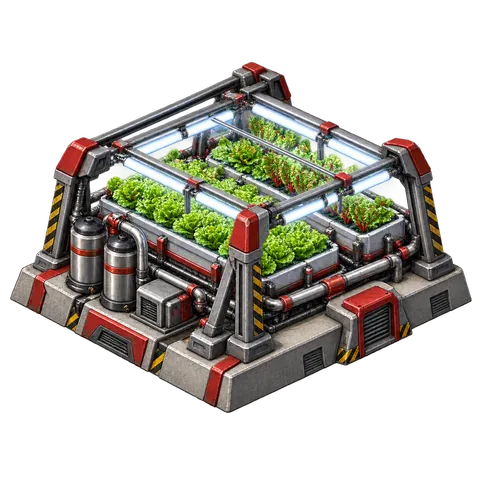
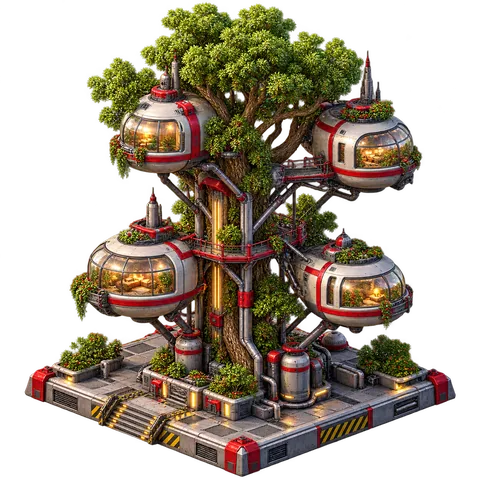
This illustration shows a glass dome full of trees and plants, with machinery around its base.
Look closer
- Look through the glass. What is growing inside?
- Find the pipes and tanks around the edge.
Think about it
- What problems could growing food in a dome solve, and what might it cost?
- What could go wrong if one part of a living system failed?
- What did Biosphere 2 teach about how complicated nature is?
Key words
- Bioregenerative
- Using living things to recycle air, water and food.
- Ecosystem
- Living things and their environment working together.
- Biosphere
- All the parts of the Earth where life exists.
Use it in class
- Design a Mars colony: a student project (Project, grades 5-12)
- Free images for the classroom: how to use and credit them (Guide, grades Teachers, 6-12)
Sources
The real-world facts on this page are based on these sources:
- University of Arizona, history of Biosphere 2 (first closed mission 1991-1993)
- European Space Agency, MELiSSA (Micro-Ecological Life Support System Alternative) project