History What it was
An amphitheater ("theater on both sides") is an oval arena surrounded by rising rows of seats. Amphitheaters were built across the Roman world, from Britain to North Africa. The oldest surviving stone example is in Pompeii, built around 70 BC.
The most famous is the Flavian Amphitheater in Rome, now called the Colosseum. It was begun under the emperor Vespasian and dedicated by his son Titus around AD 80. Its later name probably came from a colossal statue that stood nearby.
History How it worked
The Colosseum had 80 entrance arches, most of them numbered so that spectators could find their section quickly, a little like gates at a modern stadium. Seating was arranged by social rank: the emperor and senators sat closest to the arena, and women, the poor and enslaved people sat high at the top.
Below the arena floor was the hypogeum, a maze of tunnels and rooms where animals and performers waited. Lifts worked by ropes and pulleys raised them up through trapdoors into the arena. On hot days, sailors stretched a huge canvas awning called the velarium over part of the seating to give shade.
History What happened there
A day of games might begin with animal hunts in the morning and end with gladiator contests in the afternoon. These shows were paid for by emperors and wealthy citizens to win popularity. Many of the contests were violent and cruel, and they were part of how Roman leaders showed their power.
History Places you can still see
The Colosseum still stands in the center of Rome. The Arena di Verona in Italy is still used for opera performances, and the amphitheater at El Jem in Tunisia is one of the best preserved in Africa.
Art In this artwork
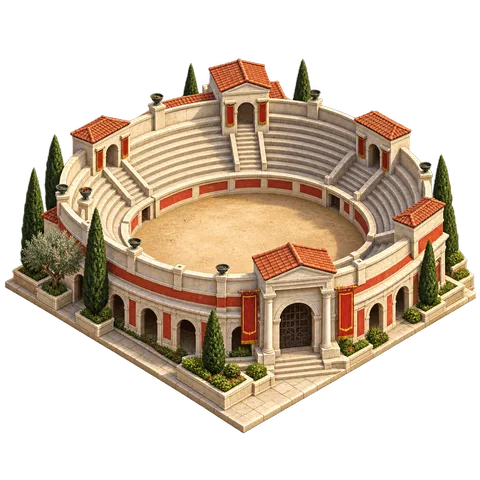
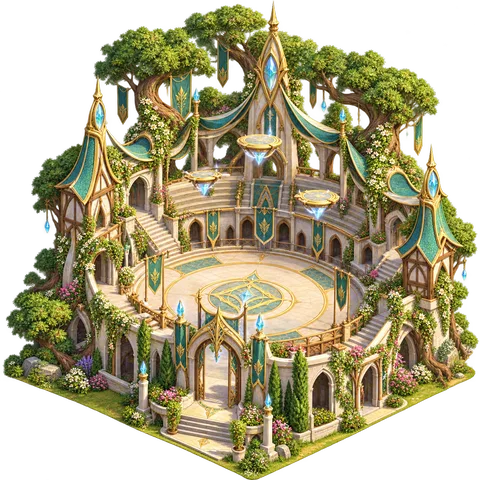
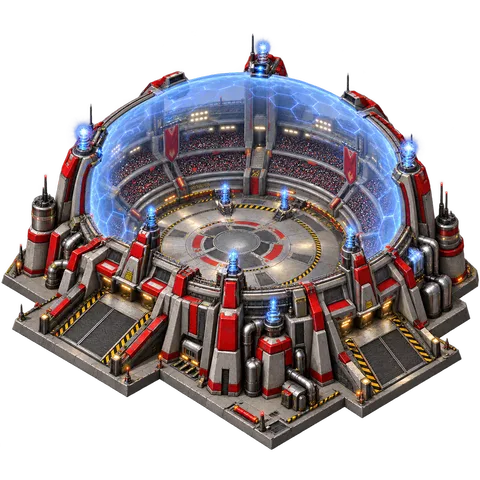
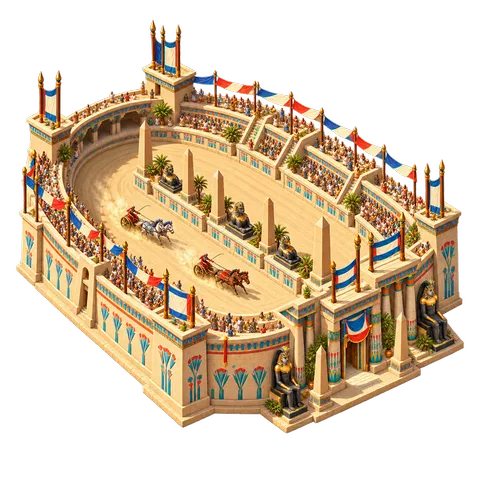
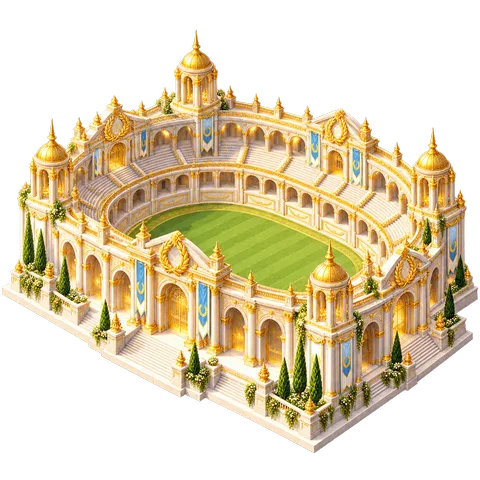
This arena resembles the Colosseum but is an artistic illustration, smaller and simplified.
Look closer
- Count the levels of arches around the outside.
- Look at how the seats rise in rings around the arena.
Think about it
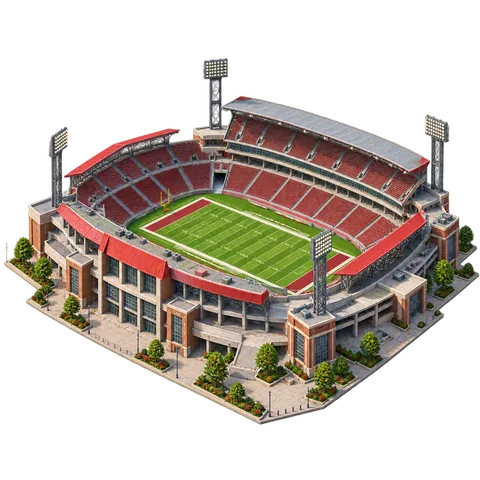
- Seats were arranged by social rank. How do stadiums decide who sits where today?
- Why would leaders pay for huge free shows?
- How did 50,000 people get in and out without modern technology?
Key words
- Arena
- The sandy floor where the shows took place (from the Latin for sand).
- Hypogeum
- The underground rooms below the arena.
- Velarium
- A giant awning for shade.
Use it in class
- Roman engineering: arches, concrete, roads and domes (Lesson, grades 6-10)
- Ancient Rome vs modern cities: compare and contrast (Lesson, grades 6-12)
Sources
The history on this page is a short summary based on these sources:
- Encyclopaedia Britannica, "Colosseum"
- Smarthistory, "The Colosseum"
- UNESCO World Heritage Centre, "Amphitheatre of El Jem"
- UNESCO World Heritage Centre, "Archaeological Areas of Pompei, Herculaneum and Torre Annunziata"