History What it was
Going to the baths was part of everyday Roman life. Small neighborhood baths (balneae) were everywhere, and emperors built enormous public baths (thermae) that could serve thousands of people a day. The entry fee was very low, so rich and poor alike could visit.
The largest baths were more like leisure centers. Besides pools, they could include exercise yards, gardens, meeting halls and even libraries.
History How it worked
A visit usually followed a route through rooms of different temperatures.
- Apodyterium: changing room with shelves for clothes.
- Palaestra: open courtyard for exercise and ball games.
- Tepidarium: warm room to get used to the heat.
- Caldarium: hot room with a hot pool, like a steam room.
- Frigidarium: cold room with a cold plunge pool to finish.
Romans did not use soap as we do. They rubbed olive oil onto their skin and then scraped off the oil, sweat and dirt with a curved metal tool called a strigil.
History Heating the water and floors
The hot rooms were heated by a system called a hypocaust. A furnace, kept burning by workers, pushed hot air into a hollow space under the floor, which was raised on short stacks of tiles. The hot air also rose through hollow clay pipes inside the walls, so the whole room was warmed. The floors could get so hot that bathers wore wooden-soled sandals.
History Noisy neighbors
The Roman writer Seneca once lived above a bathhouse and complained in a letter about the noise: people grunting as they lifted weights, splashing into the pool, and sellers calling out to sell snacks. His letter shows that the baths were busy, lively social places.
History Places you can still see
The towering walls of the Baths of Caracalla still stand in Rome, and operas are staged in its ruins in summer. Part of the Baths of Diocletian became a church designed by Michelangelo. In the English city of Bath, hot spring water still flows into the great Roman bath.
Art In this artwork
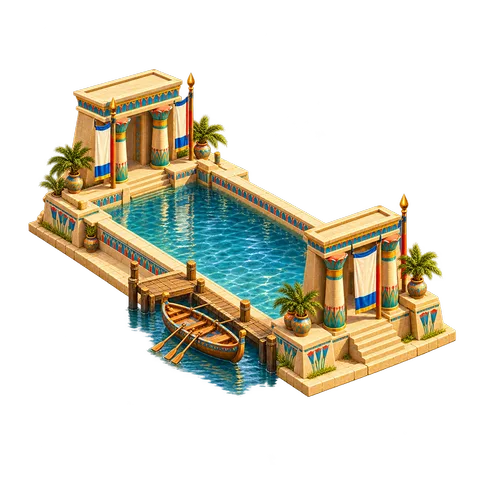
The layout and decoration here are imagined. Real imperial baths were far larger, with vaulted halls and many separate rooms.
Look closer
- Notice the steam rising from the pool.
- Find where water flows into the building.
Think about it
- Romans went to the baths to wash and to meet people. What places today do both jobs?
- What would it take to heat so much water without electricity or gas?
- Why do you think entry was kept cheap?
Key words
- Hypocaust
- An underfloor heating system using hot air.
- Strigil
- A curved tool for scraping oil and dirt off skin.
- Caldarium
- The hot room.
- Frigidarium
- The cold room.
Use it in class
- What was daily life like in ancient Rome? (Explainer, grades 5-12)
- How did Roman aqueducts work? (Explainer, grades 4-12)
Sources
The history on this page is a short summary based on these sources:
- Encyclopaedia Britannica, "Thermae" and "Baths of Caracalla"
- Smarthistory, "Baths of Caracalla"
- Seneca, Letters to Lucilius, Letter 56 (on the noise of a bathhouse)
- Vitruvius, On Architecture (1st century BC), Books 2, 5, 8 and 10
- UNESCO World Heritage Centre, "City of Bath"