Real world How spinning can feel like gravity
When a car turns a sharp corner, you feel pushed toward the outside. In a spinning ring, the floor is on the outside, so the ring constantly pushes you inward and you feel pressed against the floor, like gravity. The faster the spin or the bigger the ring, the stronger the effect.
Real world The catch
In a small ring spinning fast, your head and feet feel different forces, and turning your head can make you dizzy and sick. To feel comfortable, a ring needs to be large and spin slowly, which means it would be huge and expensive. Researchers have tested short-arm centrifuges on Earth, where people lie on a spinning bed, to study whether short daily spins could protect health.
Possible future How it would work in a settlement
On the Moon or Mars, a circular track could tilt and spin to add extra "gravity" for exercise or sleep. In open space, a whole station could rotate. Building one would require strong materials, balance (so it does not wobble), and a way for people and supplies to move between the spinning part and the still part.
Art In this artwork
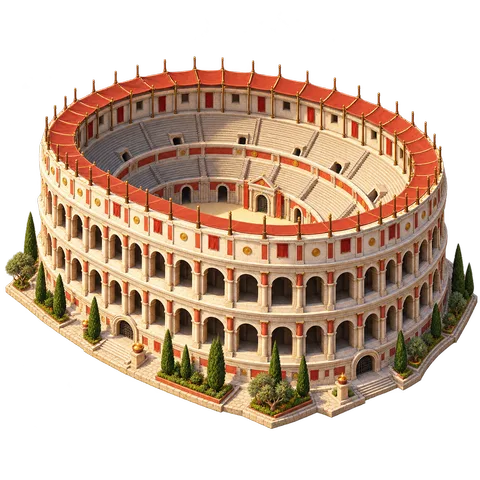
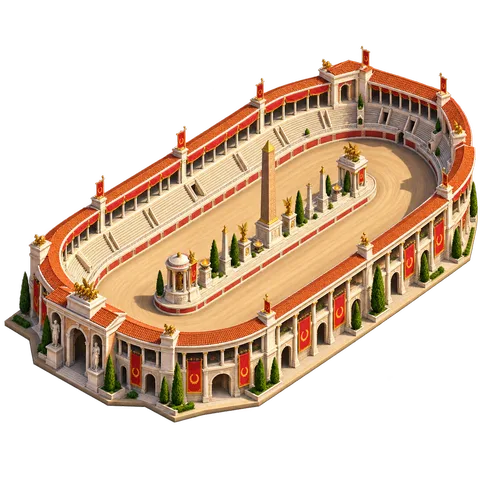
This illustration shows a domed arena with an oval track. Here we imagine it as a spinning ring for artificial gravity.
Look closer
- Find the oval track inside the dome.
- Which way would you feel pushed as it spins?
Think about it
- Why do you feel pushed outward on a fast roundabout?
- Would you rather exercise every day or live in a spinning station?
- What problems would a spinning station need to solve?
Key words
- Centrifuge
- A machine that spins things very fast.
- Artificial gravity
- A force that feels like gravity, created by spinning or speeding up.
- Rotation
- Turning around a center.
Sources
The real-world facts on this page are based on these sources:
- NASA and research reviews on artificial gravity and rotating spacecraft
- NASA Human Research Program, hazards of human spaceflight (radiation, isolation, distance, gravity, hostile environments)