Real world Why towns need warehouses
Almost everything you buy has passed through a warehouse. Goods arrive from factories and farms in bulk, are stored, then split into smaller orders for shops or for delivery to homes. Warehouses help keep shelves stocked and smooth out the gap between when things are made and when people buy them.
Real world How a modern warehouse works
Goods often travel in standard shipping containers, an idea developed in the 1950s, which can move from ship to train to truck without being unpacked. Barcodes, first scanned in a shop in 1974, and computer systems track every item. Some warehouses use robots to carry shelves to workers or to sort parcels.
Warehouses are simple to build: a steel frame, a wide-span roof, a concrete floor strong enough for forklifts, and loading docks for trucks. Large flat roofs are good places for solar panels.
Real world Effects on a town
Warehouses provide many jobs, but they also bring truck traffic, noise and pollution to nearby streets. Planners try to place them near major roads and railways, away from homes, and many now require electric vehicles and loading bays that keep trucks off residential streets.
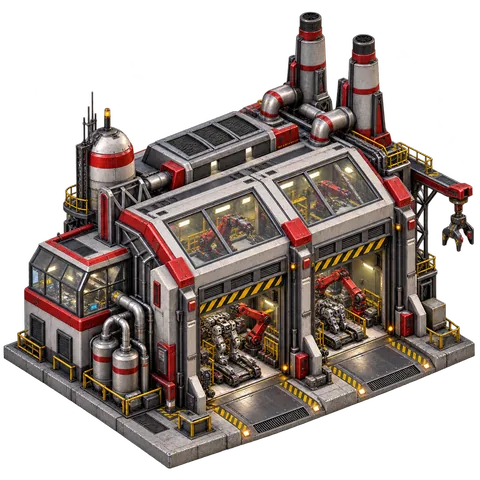
Art In this artwork
This illustration shows a steel warehouse with a large roller door and skylights.
Look closer
- Find the roller door. What size of vehicle could use it?
- Notice the skylights in the roof.
Think about it
- Pick something you own. How many places might it have traveled through to reach you?
- What are the good and bad effects of a warehouse next to homes?
- How could deliveries be made cleaner and quieter?
Key words
- Logistics
- Organizing how goods are moved and stored.
- Loading dock
- A platform where trucks load and unload.
- Barcode
- Lines a scanner reads to identify a product.
Sources
The facts on this page are based on these sources:
- US Bureau of Labor Statistics, "Warehousing and Storage" industry overview
- Encyclopaedia Britannica, "Containerization" and "Bar code"