Real world Why offices exist
Many jobs involve working with information: accounting, design, law, government, customer service and more. Offices bring teams together so that they can share ideas, meet clients and use shared equipment.
Since 2020 many people have worked partly from home. That is changing how offices are designed, with more meeting and collaboration spaces and fewer rows of desks, and some empty offices are being converted into homes.
Real world How an office building is built
Most modern offices use a steel or concrete frame, which lets floors be open and flexible: walls can be moved as teams change. The outside is often a "curtain wall" of glass and metal panels hung on the frame. Raised floors or ceiling spaces hide cables, ducts and pipes.
Real world A healthy workplace
People spend many hours in offices, so daylight, fresh air, comfortable temperatures and quiet places to concentrate matter. Buildings use a lot of energy, so efficient lighting, good insulation and smart controls help cut costs and emissions. Green building rating systems reward designs that do this well.
Art In this artwork
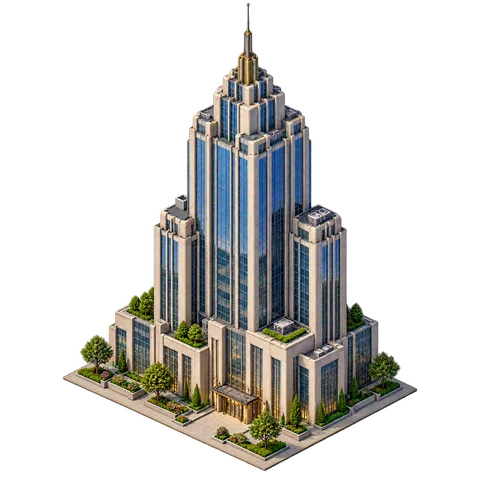
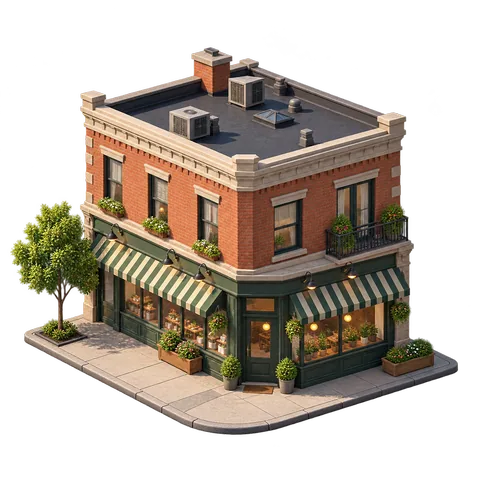
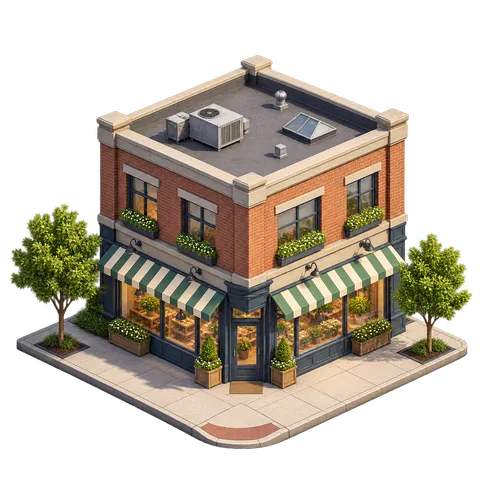
This illustration shows a mid-rise brick and glass office building.
Look closer
- Find the large windows. How might they help people working inside?
- Where could workers park a bike or catch a bus?
Think about it
- How do people get to work here, and what does each way of traveling need?
- Would you rather work from home or in an office? Why?
- What could happen to empty office buildings?
Key words
- Curtain wall
- A non-structural outer wall, often of glass.
- Hybrid work
- Splitting time between home and the workplace.
- Open plan
- A large space without many walls.
Sources
The facts on this page are based on these sources:
- International Energy Agency, "Buildings" (energy use and emissions)
- International Code Council, "International Building Code" (overview)