Possible future Why robots first?
Building a settlement involves heavy, dangerous work in a spacesuit, which is slow and tiring. Robots could arrive years before people, preparing landing pads, digging, printing shelters and setting up power, then keep working day and night while people focus on science and living.
Real world Robots in space today
Robotic arms such as Canadarm2 on the International Space Station move cargo and help astronauts. Rovers on Mars drive themselves partway, choosing safe paths between commands from Earth. Factories on Earth already use robots to weld, assemble and inspect.
Possible future Building and maintaining robots far from home
Robots on the Moon or Mars must survive sharp dust, huge temperature swings and radiation that can scramble electronics. They would need to be repairable, ideally by other robots, using standard parts, and a factory with 3D printers and machine tools to make spares. Engineers dream of a factory that could build most of its own parts from local materials, but that is a very hard problem.
Art In this artwork
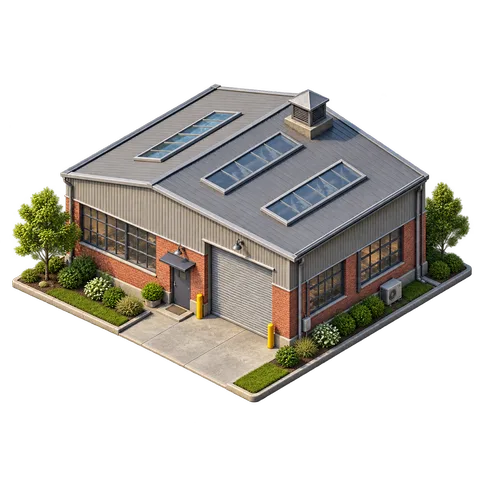
This illustration shows a factory with glass walls, robotic arms and machinery inside.
Look closer
- Look for robotic arms through the windows.
- Where would finished parts come out?
Think about it
- If robots build things, who checks they are safe and fair?
- What jobs should robots do, and what jobs should people keep?
- How would you repair a robot millions of kilometers from a shop?
Key words
- Autonomous
- Able to work without being controlled step by step.
- Robotic arm
- A machine arm that can grip, lift and move things.
- Spare part
- A replacement for a broken piece.
Sources
The real-world facts on this page are based on these sources:
- NASA and Canadian Space Agency, Canadarm2, Robonaut 2 and Astrobee robots
- NASA, "In-Situ Resource Utilization" (using local resources on the Moon and Mars)