Possible future Why make things on site?
A Mars settlement could not order spare parts and have them arrive tomorrow: supply ships might come only every couple of years. Instead of carrying a spare for every possible breakdown, residents would carry printers and raw materials and make what they need.
Real world Printing in space today
In 2014, the first 3D printer was installed on the International Space Station, built by the company Made In Space with NASA. Among its first prints was a part of its own faceplate, and later it printed a ratchet wrench from a design emailed from Earth. Experiments have since tested recycling used plastic into new printer filament in space.
Possible future What a fabrication shop would need
- Printers for plastic, metal and local-soil materials.
- Machine tools to cut and finish parts accurately.
- A digital library of designs, checked and tested.
- Recyclers to turn packaging and broken parts into raw material.
- Skilled people who can design, print and test replacements.
Art In this artwork
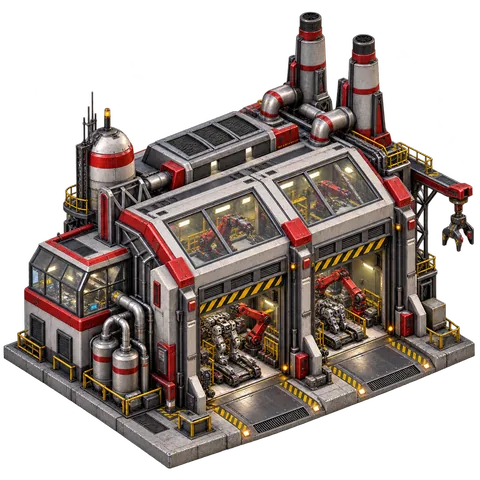
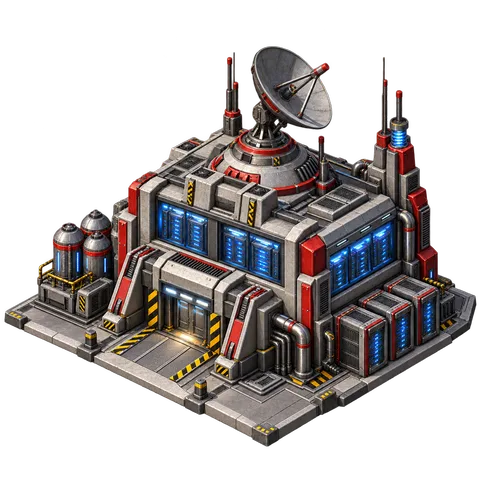
This illustration shows a high-tech shop with a large glowing screen and machinery.
Look closer
- Find the glowing screen.
- What might be made in this shop?
Think about it
- What would you print if you had a 3D printer at home?
- Why might it be safer to carry printers than spare parts?
- How could printing help reduce waste on Earth?
Key words
- 3D printer
- A machine that builds objects layer by layer.
- Filament
- The plastic thread a 3D printer melts.
- On demand
- Made when needed.
Use it in class
- How do astronauts live on the International Space Station? (Explainer, grades 3-12)
Sources
The real-world facts on this page are based on these sources:
- NASA and Made In Space, first 3D printer on the International Space Station (2014)
- Encyclopaedia Britannica, "3D printing"