Real world Why lighthouses are still needed
Ships carry most of the world's trade. Even with satellite navigation, ships need visible markers near dangerous coasts, in case electronics fail, and to confirm their position. Lighthouses, buoys and beacons are called aids to navigation.
Real world How a lighthouse works
Early lighthouses burned wood, coal or oil. In the 1820s, the French physicist Augustin Fresnel designed a lens made of rings of glass prisms that bends light into a strong, narrow beam. Fresnel lenses made lights visible many kilometers out to sea and were used around the world.
Each lighthouse has its own "signature": a pattern of flashes and a color, printed on nautical charts, so sailors can tell which light they are seeing at night. Painted stripes or colors help identify it by day.
Real world From keepers to automation
For generations, lighthouse keepers and their families lived at remote stations, trimming wicks, winding clockwork and cleaning lenses. During the 20th century, electric lamps and automatic controls replaced most keepers. Many old lighthouses are now museums, while modern LED lights do the work.
Art In this artwork
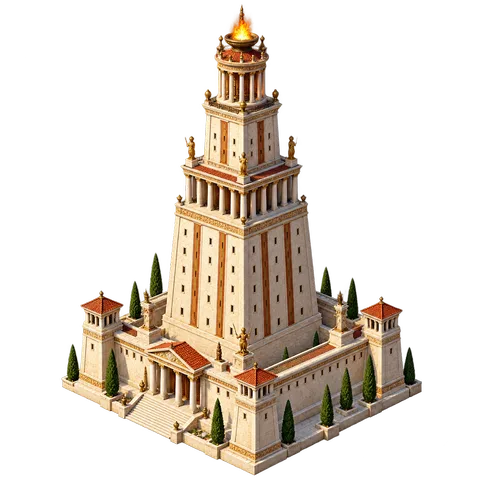
This illustration shows a striped lighthouse on a rocky island with a keeper's house.
Look closer
- Find the lantern room at the top.
- Why might it be painted with red and white stripes?
Think about it
- Why might ships still need lighthouses in the age of GPS?
- What would it be like to live as a lighthouse keeper?
- What other "signals" help keep people safe?
Key words
- Fresnel lens
- A lens made of rings of prisms that focuses light.
- Nautical chart
- A map for sailors.
- Aid to navigation
- Any marker that helps ships find their way.
Sources
The facts on this page are based on these sources:
- US Coast Guard, aids to navigation and lighthouse history
- National Park Service, "Maritime Heritage: Lighthouses" and the Fresnel lens