History What it was
Most people in Rome did not live in houses. They rented rooms in apartment blocks called insulae ("islands"), several stories high, packed along narrow streets. Rome was one of the most crowded cities in the ancient world.
History How it worked
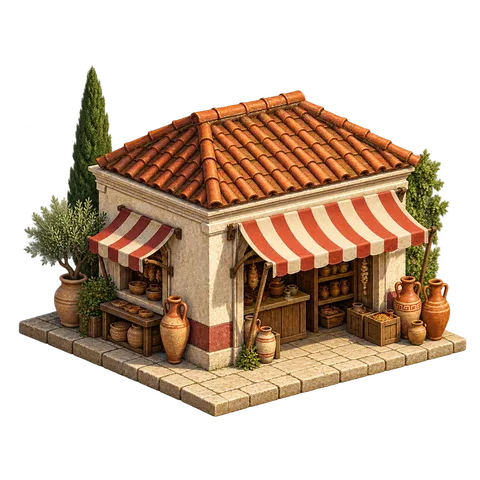
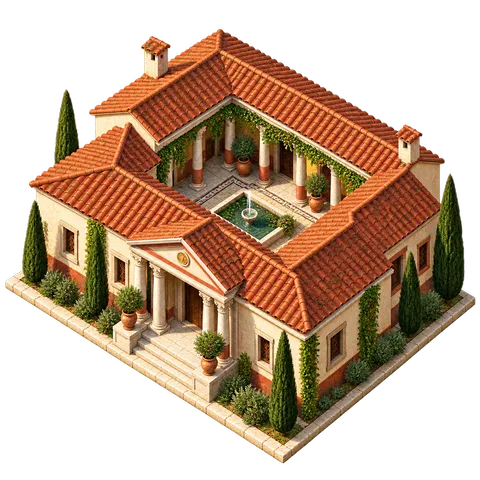
The ground floor usually held shops opening onto the street, with the shopkeepers often living in a room behind or above. Stairs led to the apartments upstairs. Many blocks were built around a central courtyard that let light and air into the lower floors.
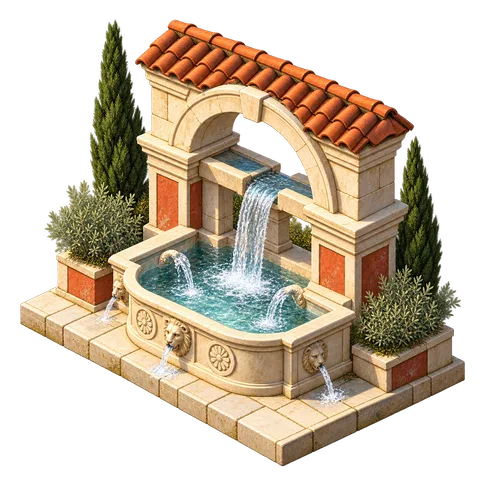
Unlike today, the best apartments were on the lower floors. The upper floors were cheaper because they were smaller, hotter, harder to reach and more dangerous. There was no running water upstairs, so residents fetched water from public fountains and used public toilets.
History Dangers
Apartment blocks were sometimes badly built, and fire was a constant danger, especially for people on the top floors. After the great fire of AD 64, rules were introduced for wider streets and more fire-resistant building. The emperor Augustus also set a height limit for new buildings, recorded by the ancient writer Strabo as about 70 Roman feet (about 20 meters).
History Places you can still see
The best surviving examples are in Ostia, Rome's ancient port, where whole streets of apartment buildings stand several stories high. In Rome itself, the Insula dell'Ara Coeli at the foot of the Capitoline Hill still shows several floors of a block.
Art In this artwork
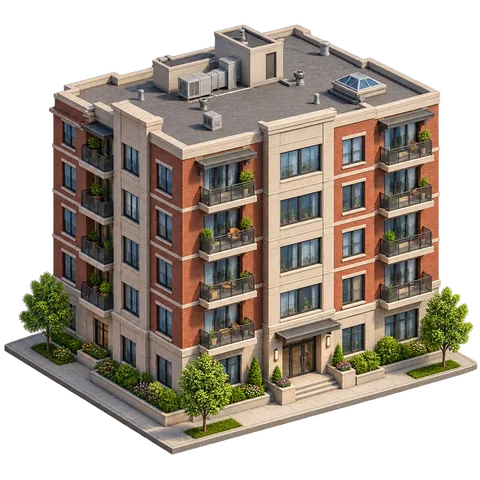
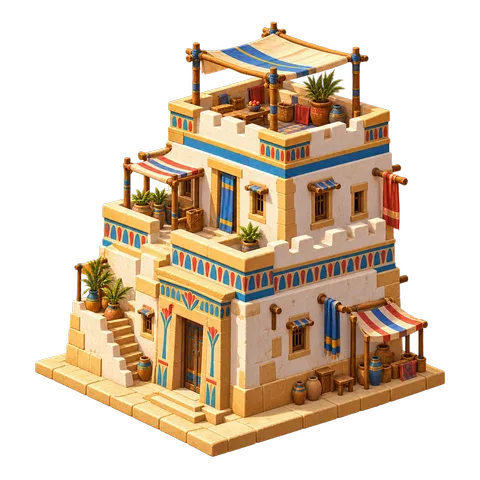
The bright colors, plants and balconies are the artist's interpretation of a cheerful apartment block.
Look closer
- Find the shops at street level.
- Count the floors. Which would you want to live on?
Think about it
- What would make living on an upper floor easier or harder?
- Why do you think the best Roman apartments were on the lower floors?
- How do modern apartment buildings handle water, fire and stairs?
Key words
- Insula
- An apartment block (Latin for island).
- Story
- One floor of a building.
- Landlord
- Someone who rents out property.
Use it in class
- What was daily life like in ancient Rome? (Explainer, grades 5-12)
- Ancient Rome vs modern cities: compare and contrast (Lesson, grades 6-12)
Sources
The history on this page is a short summary based on these sources:
- Smarthistory, "Roman domestic architecture: the insula"
- Smarthistory, "Ostia: an introduction"
- Strabo, Geography, Book 5