History What it was
Roman streets were lined with small shops called tabernae. Each was usually a single room with a wide doorway that could be closed at night with wooden shutters. Many were built into the ground floors of apartment blocks and town houses.
History How it worked
Shopkeepers sold goods from a counter at the front, and often made them on the spot. A shop might be a bakery, a cloth seller, a metalworker, a barber or a wine seller. Some families lived in a small room at the back or on a mezzanine floor above.
In Pompeii, bakeries still have their stone millstones, which were turned by donkeys or workers to grind grain into flour, and their big brick ovens. Painted signs and slogans on walls advertised goods and even election candidates.
History Places you can still see
Trajan's Market in Rome, built in the early 2nd century AD, is a multi-level complex of shops and offices curving along the side of a hill. In Ostia and Pompeii, whole streets of shop fronts survive, with counters and grooves where the shutters slid into place.
Art In this artwork
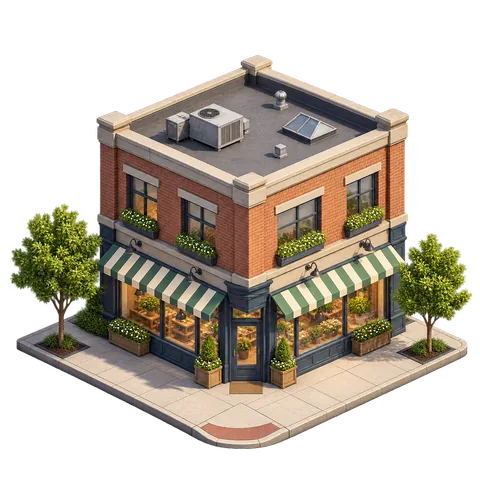
The striped awning, jars and goods are the artist's interpretation.
Look closer
- What goods can you see? How are they stored?
- Find the awning that shades the counter.
Think about it
- Where do people near you buy everyday things, and how far do they travel?
- What are the advantages of living above or behind your shop?
- How did shops advertise without screens or printing?
Key words
- Taberna
- A shop or workshop.
- Mezzanine
- A low floor between two main floors.
- Millstone
- A heavy stone used to grind grain.
Use it in class
- What was daily life like in ancient Rome? (Explainer, grades 5-12)
Sources
The history on this page is a short summary based on these sources:
- Smarthistory, "Roman domestic architecture: the insula"
- Smarthistory, "Ostia: an introduction"
- UNESCO World Heritage Centre, "Archaeological Areas of Pompei, Herculaneum and Torre Annunziata"