Real world What comes from Earth
Some things are very hard to make far from Earth: computer chips, precision machines, medicines and special seals. These would be shipped from Earth, packed into standard modules and containers like the ones in this picture.
Possible future What could be made locally
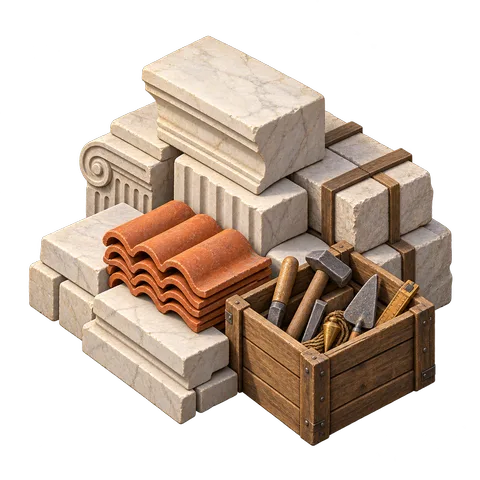
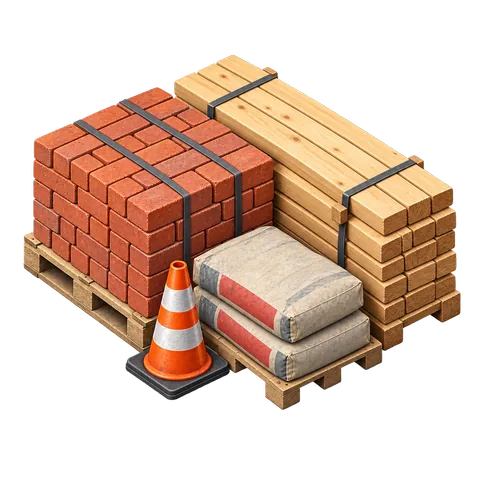
Bulk materials, such as shielding, walls, roads and landing pads, would be made from local soil. Lunar soil contains oxygen, silicon, iron, aluminum, titanium and calcium bound up in minerals, which could one day be extracted. The European Space Agency and NASA have tested ways to turn simulated lunar soil into bricks and printed structures.
Possible future Nothing wasted
Every container, panel and piece of packaging that arrives from Earth would be designed to be reused: crates that become furniture, tanks that become rooms, plastic that becomes printer filament. Engineers sometimes describe this goal as "ship the brains, build the bulk".
Art In this artwork
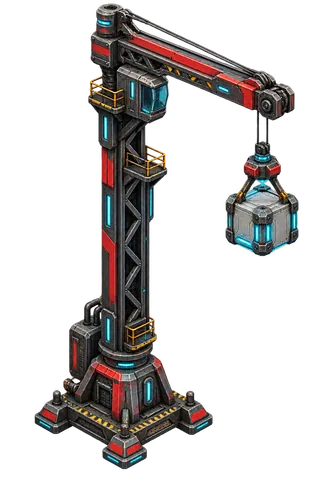
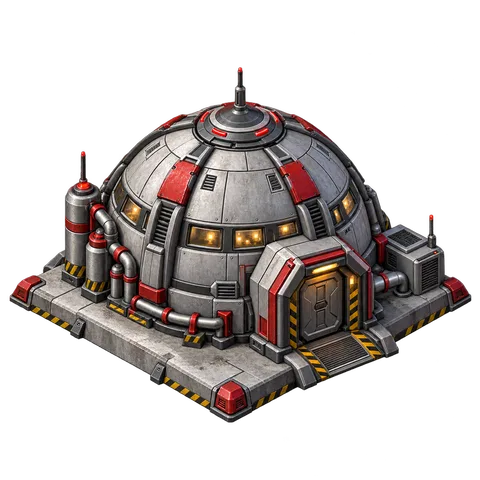
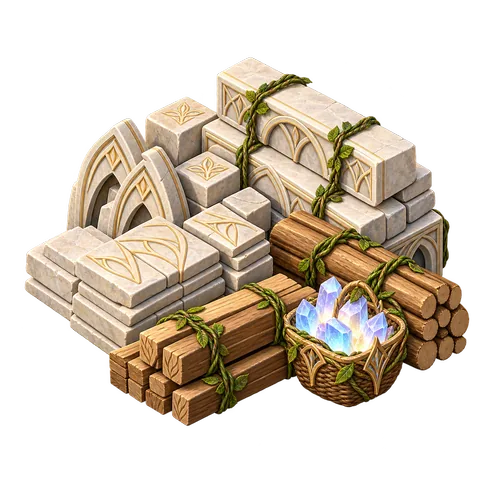
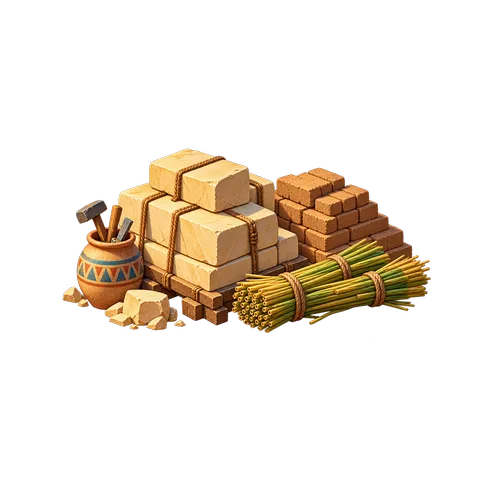
This illustration shows stacked modules and containers with glowing panels, ready for assembly.
Look closer
- Notice the panels and containers.
- Which parts look like they came from Earth?
Think about it
- Could buildings be designed to be taken apart and reused?
- What would you ship from Earth, and what would you make locally?
- How could packaging on Earth be reused instead of thrown away?
Key words
- Regolith
- Loose soil and dust covering rock on the Moon or Mars.
- Bulk material
- Material needed in large amounts, like soil or concrete.
- Simulant
- A material made on Earth to copy lunar or Martian soil.
Sources
The real-world facts on this page are based on these sources:
- European Space Agency, research on building with lunar regolith
- NASA, "In-Situ Resource Utilization" (using local resources on the Moon and Mars)