Imagined What it could do
Imagine a market hall where every fruit is sold, shared or turned into jam, every peel goes back to the gardens as compost, and goods are carried home in woven baskets instead of plastic.
Real world The problem of waste
Around the world, a large share of the food that is grown is lost or thrown away, along with the water, land and energy used to grow it. The UN Environment Program estimated that in 2022 about a fifth of the food available to shoppers, shops and restaurants was wasted. Food rotting in landfill also releases methane, a powerful greenhouse gas.
Real world Ideas towns are using
- Farmers' markets that sell food grown nearby, often with less packaging.
- Refill shops where customers bring their own containers.
- Food-sharing schemes that pass unsold food to people who need it.
- Composting food scraps to feed the soil, closing the loop.
- Selling "wonky" fruit and vegetables that look odd but taste fine.
Local food is not always lower-carbon: how food is grown can matter more than how far it travels. But local markets help small farmers and connect people to where food comes from.
Art In this artwork
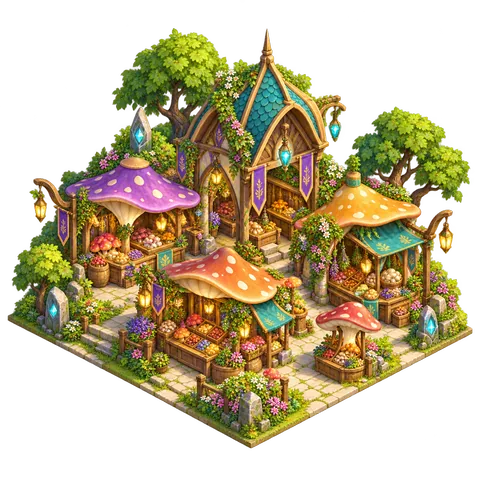
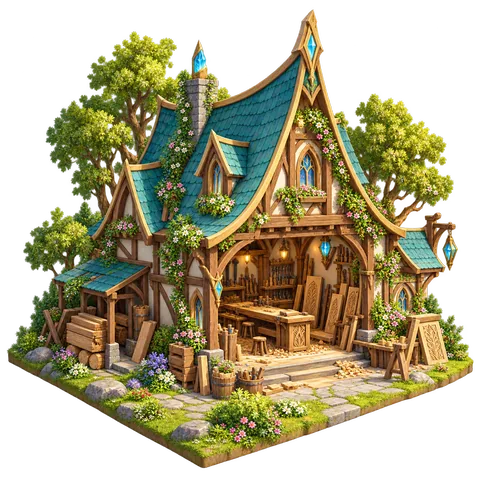
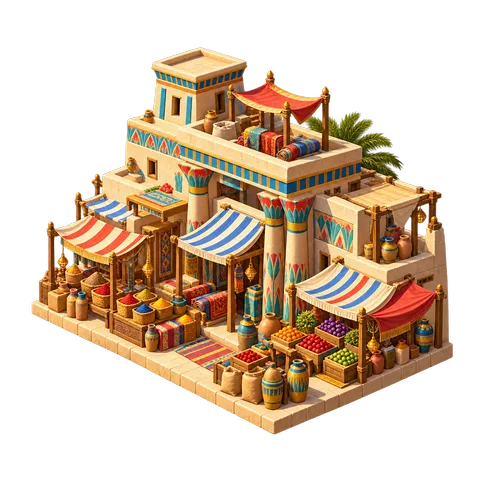
This illustration shows a large timber market hall with purple banners, stalls and trees growing through it.
Look closer
- Find the stalls and the goods for sale.
- How do the trees fit into the building?
Think about it
- What happens to food that is not sold where you live?
- How could a market produce less waste?
- Is food grown nearby always better for the planet? Why or why not?
Key words
- Compost
- Rotted plant waste that feeds the soil.
- Zero waste
- Aiming to send nothing to landfill.
- Methane
- A powerful greenhouse gas.
Sources
The real-world facts on this page are based on these sources:
- United Nations Environment Programme, "Food Waste Index Report 2024"
- Food and Agriculture Organization of the United Nations, "Global Food Losses and Food Waste" (2011)