
Step by step
- Find a source: a spring, river or lake higher than the city.
- Survey the route so that it slopes downhill all the way, following the land's contours.
- Dig a covered channel, lined with waterproof mortar, mostly below ground.
- Cross valleys on arched bridges and tunnel through hills, keeping the slope.
- Let mud settle out in tanks along the way.
- Divide the water in a distribution building (castellum) into pipes for fountains, baths and paying customers.
How gentle was the slope?
Very gentle. The aqueduct to Nîmes in France, which crosses the Pont du Gard, runs for about 50 kilometers but drops only around 12 meters in total. Keeping such a precise slope over long distances was a remarkable feat of surveying.
How many aqueducts did Rome have?
The first, the Aqua Appia, was built in 312 BC. By the 3rd century AD, the city of Rome was served by eleven major aqueducts. Around AD 97, the water commissioner Frontinus wrote a book describing how they were run and the problems of leaks and water theft.
Questions students and teachers ask
Did Roman aqueducts use pumps?
No. They relied on gravity and a carefully planned downhill slope.
Why were most aqueducts underground?
An underground channel kept the water clean and cool, protected it from enemies and was cheaper than building arches.
Are any Roman aqueducts still standing?
Yes. The Pont du Gard in France and the aqueduct of Segovia in Spain are among the best preserved, and parts of Rome's aqueducts survive in the Park of the Aqueducts.
Building pages to use with this guide
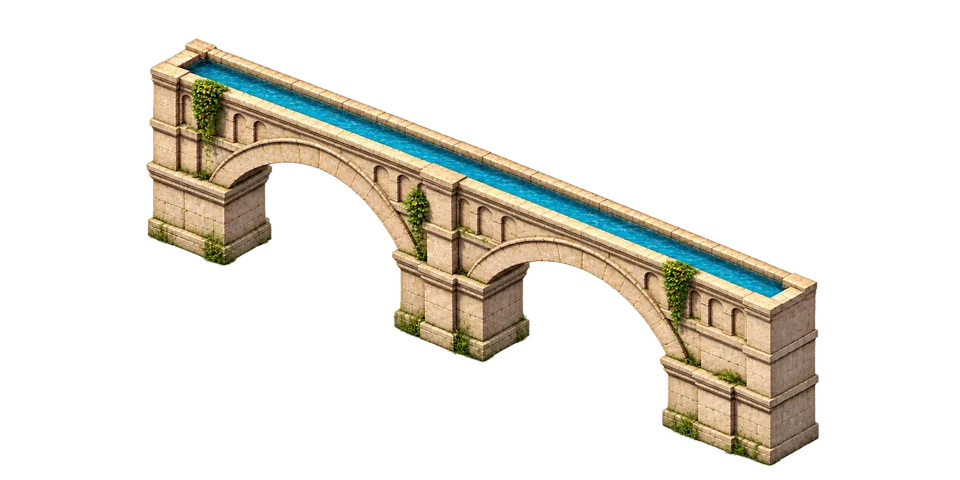 Ancient RomeAqueductA channel that carried fresh water from hills and springs many kilometers away into the city, using only gravity.
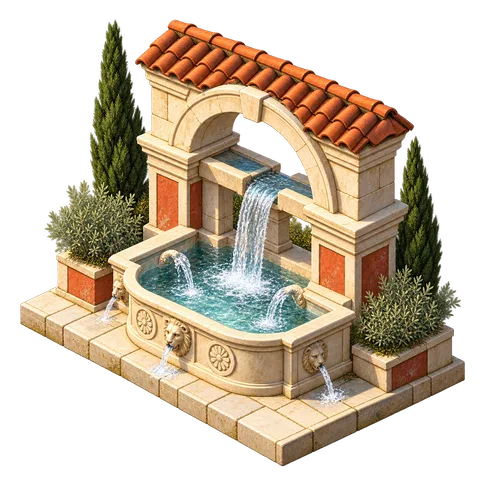 Ancient RomePublic fountainA stone basin on a street corner where anyone could collect fresh water from the aqueducts.
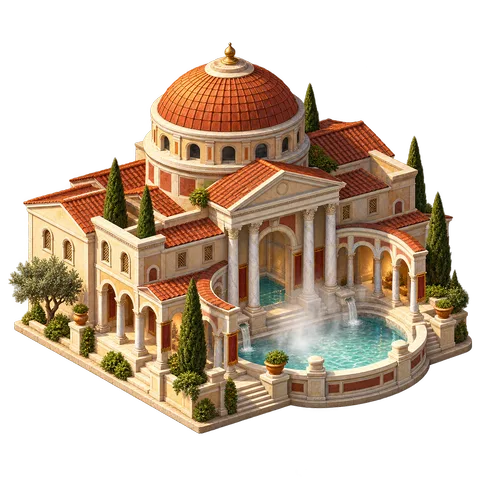 Ancient RomePublic bathsA huge bathhouse with hot, warm and cold pools where Romans washed, exercised, relaxed and met friends.
 Modern TownWater systemHidden pipes, pumps and treatment plants bring clean water to every tap and carry dirty water safely away.
Sources
The facts in this guide are based on these sources:
- Encyclopaedia Britannica, "Aqueduct"
- Frontinus, The Aqueducts of Rome (about AD 97)
- Vitruvius, On Architecture (1st century BC)