History What it was
Walls protected cities from attack and let guards control who came in and out through the gates. Rome had early walls, but as the empire grew strong and its borders far away, the city spread far beyond them and for centuries had no need for new defenses.
In the 3rd century AD, the empire faced invasions and civil wars. Between AD 271 and 275, the emperor Aurelian built a new wall around Rome, about 19 kilometers long, with a square tower roughly every 30 meters.
History How it worked
Towers stuck out from the wall so that defenders could shoot along its face at attackers trying to climb it. Gates were the weakest points, so they were usually flanked by two strong towers. Walls were later made taller and stronger as threats grew.
History Places you can still see
Long stretches of the Aurelian Walls still surround central Rome. The Porta San Sebastiano, where the Via Appia leaves the city, is one of the best-preserved gates and houses a small museum of the walls. In Britain, Hadrian's Wall, begun in AD 122, marked the empire's northern frontier.
Art In this artwork
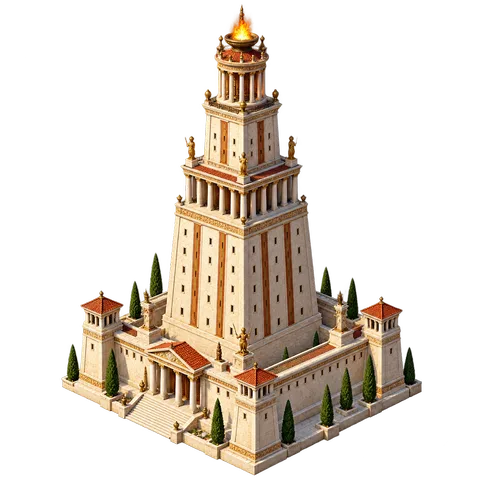
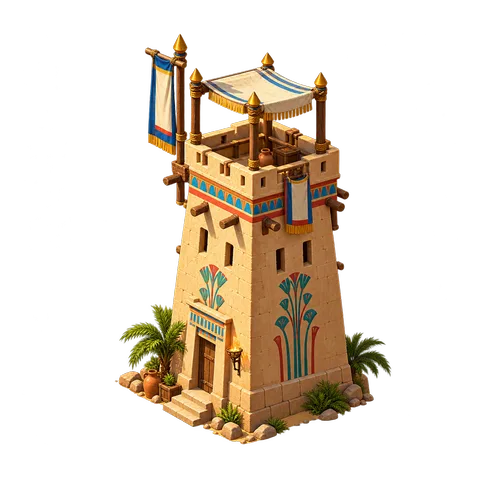
This single tower is an illustration. Real Roman city walls were long continuous circuits with many towers.
Look closer
- Find the battlements at the top of the tower.
- Why might the tower have so few windows?
Think about it
- Why did Rome go for centuries without needing new walls?
- How do cities protect people today?
- What might it feel like to live inside city walls?
Key words
- Battlements
- The notched top of a wall for defenders to shelter behind.
- Gate
- An opening in a wall that can be closed.
- Frontier
- The edge of a country or empire.
Sources
The history on this page is a short summary based on these sources:
- Encyclopaedia Britannica, "Aurelian Wall" and "Hadrian's Wall"
- UNESCO World Heritage Centre, "Frontiers of the Roman Empire"
- UNESCO World Heritage Centre, "Historic Center of Rome"