Real world Why every neighborhood needs one
Most health needs, such as check-ups, vaccinations, minor illnesses, pregnancy care and managing long-term conditions like diabetes, do not need a hospital. They are best handled close to home by a primary care team. The World Health Organization says strong primary health care is the most effective way to improve a population's health.
When clinics are hard to reach, people delay care, and small problems can turn into emergencies.
Real world Health care for everyone
In 1965, two doctors, Jack Geiger and Count Gibson, helped open one of the first community health centers in the United States, at the Columbia Point housing development in Boston, with another at Mound Bayou in rural Mississippi soon after. They treated people regardless of their ability to pay and also tackled the causes of illness, such as poor housing and lack of food.
Real world How a clinic is designed
A clinic needs a welcoming entrance with step-free access, a waiting area, private consultation rooms with sinks for hand washing, and spaces for tests and vaccines. Good ventilation and easy-to-clean surfaces help stop infections spreading. Many new clinics include rooms for social workers, dentists or mental health support.
Art In this artwork
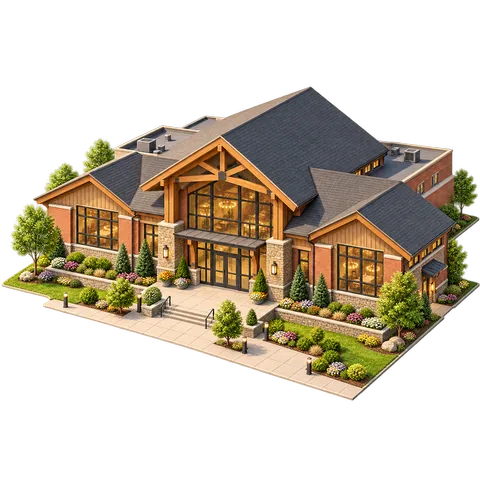
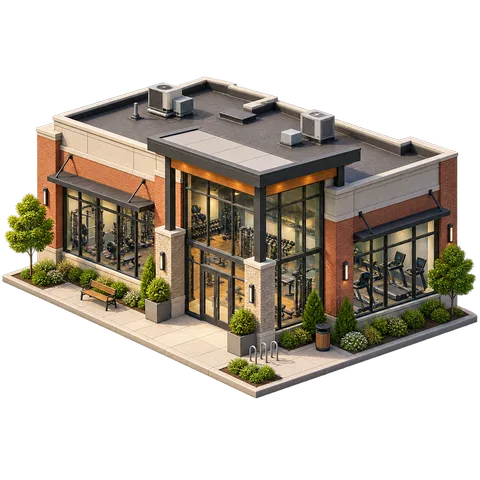
This illustration shows a welcoming single-story building with big windows. We use it to represent a neighborhood health clinic.
Look closer
- Find the main entrance. Is it easy to reach?
- Notice the big windows. How might daylight help people feel calmer?
Think about it
- How far is the nearest clinic from your home? How would you get there?
- Why might it be cheaper to keep people healthy than to treat them later?
- Besides medicine, what helps people stay healthy?
Key words
- Primary care
- Everyday health care, usually the first place people go.
- Vaccine
- A medicine that trains the body to fight a disease.
- Prevention
- Stopping illness before it starts.
Use it in class
- What does a city need to work? (Explainer, grades 3-9)
Sources
The facts on this page are based on these sources:
- World Health Organization, "Primary health care" fact sheet and the Declaration of Astana (2018)
- Massachusetts League of Community Health Centers, "History of Community Health Centers"
- US Department of Justice, "2010 ADA Standards for Accessible Design"