Imagined What it could do
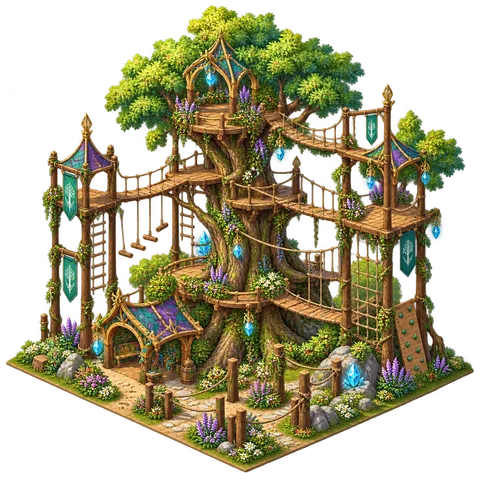
Imagine a village where homes rest on branches, linked by rope bridges, leaving the forest floor free for plants and animals. Rainwater would be gathered from leaves, and residents would look after the trees that hold them up.
Real world How to build in a tree without hurting it
Trees are living things that grow and sway. Good treehouse builders work with arborists, who are tree-care experts, to choose healthy, strong trees. They use a few large, specially designed bolts instead of many nails, because each wound is a place where disease can enter. Joints are made to slide or flex so that the tree can move in the wind and keep growing without being strangled.
Real world Lessons for real cities
The idea of "touching the ground lightly" is used in real architecture: buildings raised on posts or piles disturb less soil, let water flow underneath and protect tree roots. But building high up raises a big question of fairness: rope bridges and ladders shut out people who use wheelchairs, older people and young children. A real treetop village would need ramps or elevators.
Art In this artwork
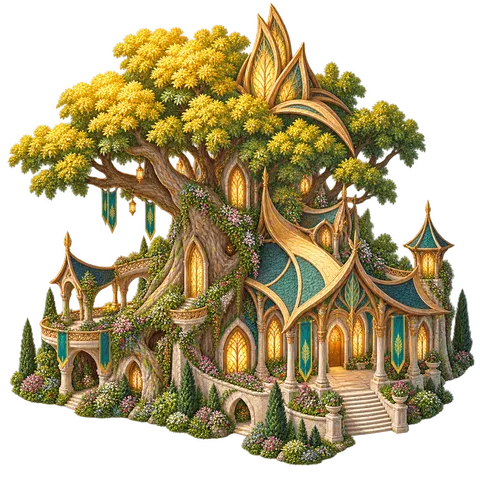
This illustration shows wooden homes and walkways built around a huge tree trunk, with lanterns and stairways.
Look closer
- Follow the bridges and stairs between the homes.
- Find where the homes rest on the tree.
Think about it
- Bridges between trees save ground space. Who might find them hard to use?
- How could a treetop village include everyone?
- What would it be like to sleep in a home that sways in the wind?
Key words
- Arborist
- A person trained to care for trees.
- Canopy
- The top layer of a forest, formed by branches and leaves.
- Footprint
- The area of ground a building covers.
Use it in class
- How to design a fantasy city: a worldbuilding guide (Guide, grades 6-12)
- Free images for the classroom: how to use and credit them (Guide, grades Teachers, 6-12)
Sources
The real-world facts on this page are based on these sources:
- International Society of Arboriculture, tree care guidance
- Smithsonian Tropical Research Institute, forest canopy research and canopy cranes