Imagined What it could do
Imagine ladders, nets and rope bridges strung through the treetops, where children practice balance and climbing while learning about the creatures that live high above the forest floor.
Real world The last frontier of the forest
In tropical rainforests, a huge share of life, including insects, birds, frogs, orchids and mosses, lives in the canopy, tens of meters above the ground. For a long time this world was very hard to study. Scientists have called the canopy one of the least explored habitats on land.
Real world How scientists get up there
- Climbing ropes, using techniques borrowed from rock climbing.
- Canopy walkways: rope or metal bridges between trees, some open to visitors.
- Towers built beside tall trees.
- Construction cranes: the Smithsonian Tropical Research Institute in Panama has used cranes to lift researchers into the canopy.
- Drones and sensors that record sounds, temperature and images.
Treetop walkways in many countries now let visitors see the canopy too, which helps people value forests and brings money to protect them.
Art In this artwork
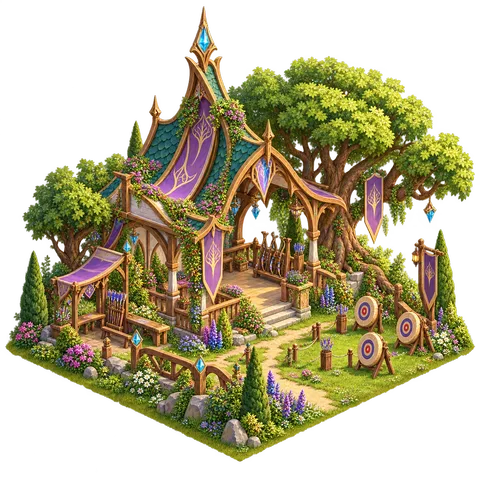
This illustration shows a treetop climbing frame of logs, ropes and platforms with red flags.
Look closer
- Find the rope bridges and ladders.
- What would you see from the highest platform?
Think about it
- What creatures might live in the treetops above your local park?
- Why might the canopy be hard to study?
- Would you walk on a rope bridge 30 meters up?
Key words
- Canopy
- The upper layer of a forest.
- Epiphyte
- A plant that grows on another plant, such as an orchid on a branch.
- Walkway
- A raised path or bridge.
Sources
The real-world facts on this page are based on these sources:
- Smithsonian Tropical Research Institute, forest canopy research and canopy cranes
- Encyclopaedia Britannica, "Tropical rainforest"