
Start with geography
Real cities grow where there is water, food and trade: on rivers, coasts, crossroads and fertile land. Decide where your city sits and why people settled there. A city on a cliff, in a forest or on a floating island will grow differently.
Ten questions every fantasy city should answer
- Where does the water come from, and where does waste go?
- What do people eat, and where is it grown?
- How do people earn a living?
- Who rules, and how do ordinary people have a say?
- Where do people gather, celebrate and worship?
- How do people travel and move goods?
- What are buildings made of, and why?
- Who is powerful, and who is left out?
- What is the city afraid of: fire, floods, storms or enemies?
- What makes visitors gasp when they first arrive?
Use the Green World as a model
Every building in this site's Green World answers one of these questions in a fantasy way, and each page shows the real-world idea behind it: seed vaults, living bridges, geothermal heat. Students can borrow the method: start with a real solution, then imagine how it could look in a world of their own.
Avoiding stereotypes
Fantasy cultures are invented, so avoid copying real cultures as costumes or making any group simply "good" or "evil". Give every group real needs, skills and disagreements.
Questions students and teachers ask
How do you make a fantasy city believable?
Base it on how real cities work: water, food, work, government and trade, then add imagined buildings and places on top.
What is worldbuilding?
Creating an imaginary world in detail, including its places, history, peoples and rules, for stories, games or art.
Building pages to use with this guide
 Green WorldTreetop villageAn imagined village of homes and bridges among the branches, built so lightly that the trees stay healthy.
 Green WorldCouncil terraceAn imagined terrace where neighbors decide together how to share the forest. Real research shows communities can manage shared resources well.
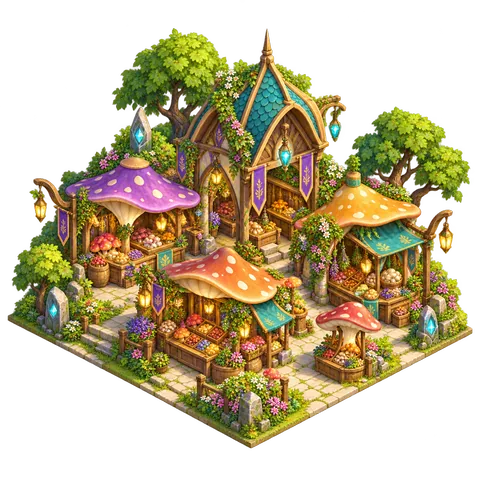 Green WorldCanopy marketMarket stalls under giant mushroom-shaped canopies. Real shade structures, and real trees, cool hot city squares.
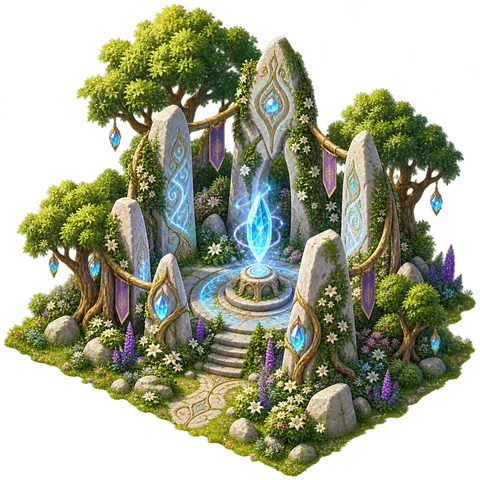 Green WorldSpring circleAn imagined ring of tall stones around a clean spring. Real cities save billions by protecting the land where their water comes from.
 Green WorldPalace of the long futureAn imagined palace where leaders must think a hundred years ahead. Real governments have begun to create laws for future generations.
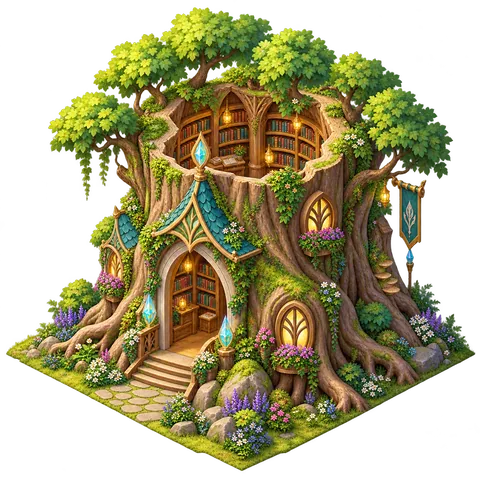 Green WorldSeed libraryAn imagined library inside a hollow tree, storing seeds instead of books. Real seed banks protect the world's plants for the future.
Sources
The facts in this guide are based on these sources:
- Elinor Ostrom, "Governing the Commons" (1990)
- Jane Jacobs, "The Death and Life of Great American Cities" (1961)