Real world Why parks matter
Parks give people places to exercise, play, picnic and relax, which supports both physical and mental health. Trees and plants cool the air through shade and by releasing water, helping reduce the "urban heat island" effect that makes cities hotter than the countryside.
Parks also soak up rain, provide homes for birds and insects, and give neighbors a free place to meet.
Real world A park for everyone
In 1858 Frederick Law Olmsted and Calvert Vaux won the competition to design Central Park in New York, believing that green space should be open to people of every class. Today, organizations such as the Trust for Public Land promote the goal that everyone should live within a 10-minute walk of a good park, because in many cities poorer neighborhoods have far less green space.
Real world How a park is designed and cared for
- Paths that are level and wide enough for wheelchairs and strollers.
- A mix of open lawns, shady trees and quiet corners.
- Ponds and rain gardens that collect and clean storm water.
- Toilets, drinking fountains, lighting and seating.
- Gardeners and volunteers who plant, prune and pick up litter.
Art In this artwork
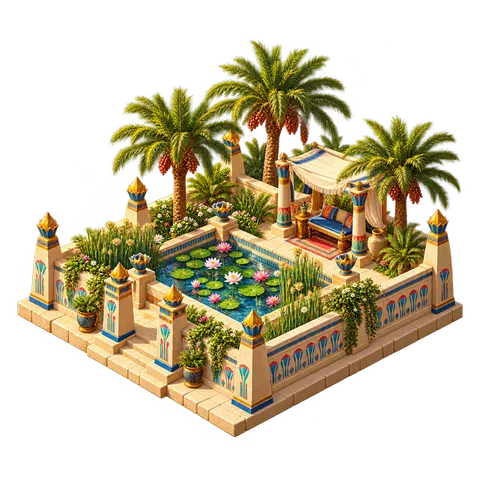
This illustration shows a small park with a pond, rocks, trees and a winding path.
Look closer
- Follow the path around the pond. Who could use it?
- Find the places where water could collect after rain.
Think about it
- How might parks help a city with heat, rainwater and wellbeing?
- Is there a park within a 10-minute walk of your home?
- What would you add to make a park better for teenagers, or for older people?
Key words
- Urban heat island
- When cities are hotter than the surrounding countryside.
- Rain garden
- A planted dip that soaks up rainwater.
- Biodiversity
- The variety of living things in a place.
Use it in class
- Design a city: a project-based unit for grades 5 to 9 (Project, grades 5-9)
- Urban planning for students (Guide, grades 7-12)
- Sustainable city project ideas for students (Project, grades 5-12)
- Explore your town: a neighborhood walk and scavenger hunt (Lesson, grades K-8)
Sources
The facts on this page are based on these sources:
- National Park Service, "Frederick Law Olmsted" and Central Park history
- Trust for Public Land, ParkScore and the "10-minute walk" research
- US Environmental Protection Agency, "Heat Island Effect"
- World Health Organization, "Guidelines on physical activity and sedentary behavior" (2020)