
Why this project works
A design a city project lets students apply geography, math, civics and science to one big question: what does a place need so that people can live well there? There is no single right answer, so students must explain trade-offs, which is where the deepest learning happens.
Real planners face the same questions. Programs such as the Urban Land Institute's UrbanPlan for high schools and PBS's "Re-design your community" project show how well students respond to authentic planning challenges.
Before you start
- Form teams of three or four and give each student a role: planner, engineer, environmental officer, community advocate.
- Give each team a large sheet of paper or a shared digital map, rulers and colored pencils.
- Decide the constraints: a river, a hill, a fixed budget of "building points", or a population target.
- Show students this site's six worlds as examples of very different answers to the same needs.
Day-by-day plan
- Day 1 - What does a city need? Brainstorm, then explore the Compare page: water, gathering places, safe travel and nature.
- Day 2 - Study an example. Each team explores one world on this site and lists five buildings and the needs they meet.
- Day 3 - Choose a site and draw the base map: water source, high and low ground, where flooding happens.
- Day 4 - Place the essentials: water supply, homes, schools, health care, food, jobs and streets. Use a scale.
- Day 5 - Add the good stuff: parks, public squares, libraries, places to gather. Check walking distances.
- Day 6 - Stress test: a heatwave, a flood, a power cut or a population boom. What changes?
- Day 7 - Present to the "city council" (the class). Council members ask one question each.
- Day 8 (optional) - Reflection: what would you change after hearing other teams?
Math and science connections
Use scale drawings and area: if one square is 100 meters, how much land do the homes take? Compare apartments and houses for the same number of people. Calculate walking times at about 5 kilometers per hour. Ask how many people one water tower or one school can serve.
Assessment ideas
- Map (25%): clear, labeled, to scale, with a key.
- Needs met (25%): water, homes, food, health, learning, transportation and nature are all provided for.
- Reasoning (25%): each major choice is explained, including trade-offs.
- Fairness and access (15%): can everyone, including people who cannot drive or who use wheelchairs, reach what they need?
- Presentation (10%): clear, shared among the team, answers questions.
Questions students and teachers ask
What grade is a design a city project best for?
It works well from grade 5 to grade 9. Younger students can focus on needs and maps; older students can add budgets, zoning, population growth and climate risks.
How long does a design a city project take?
Plan for 5 to 8 class periods. A shorter version can fit in two periods by giving students a ready-made site and a list of buildings to place.
Can students do this project digitally?
Yes. Teams can use a shared slide deck, a drawing app or even a city-building game, but paper maps make it easier to discuss and change ideas together.
What standards does it support?
It supports geography, civics and economics inquiry in the C3 Framework, and engineering design practices in the Next Generation Science Standards (MS-ETS1), when students define criteria and test their designs.
Building pages to use with this guide
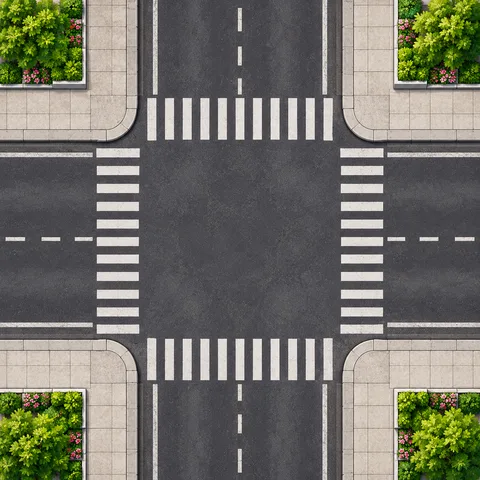 Modern TownStreets and crosswalksStreets are a town's largest public space. Their design decides whether walking, cycling and crossing feel safe.
 Modern TownWater systemHidden pipes, pumps and treatment plants bring clean water to every tap and carry dirty water safely away.
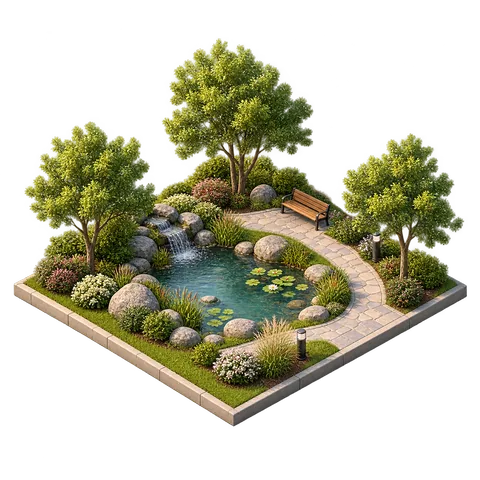 Modern TownCity parkTrees, grass, paths and water in the middle of town: free space to play, relax and cool down.
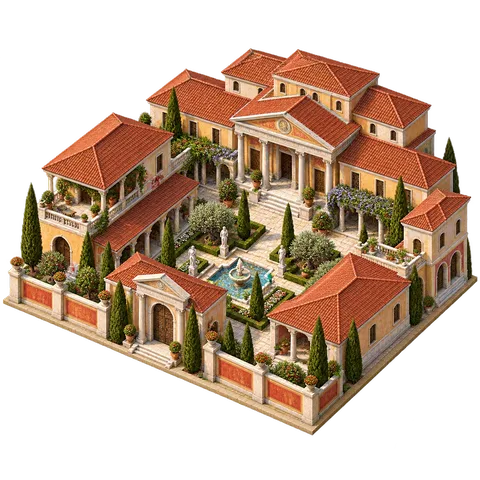 Ancient RomeForumThe central open square of a Roman town, surrounded by temples, law courts, shops and government buildings.
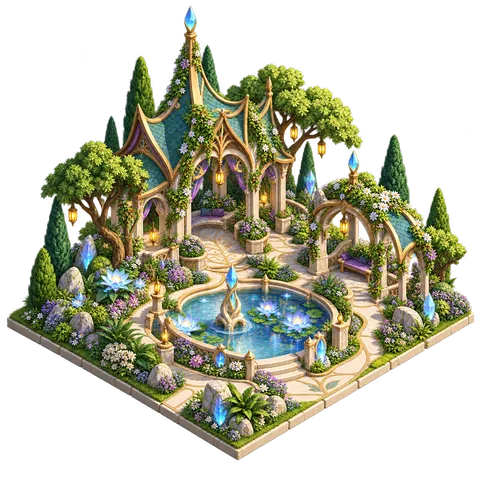 Elven Green WorldRain garden courtAn imagined courtyard garden that drinks the rain. Real rain gardens catch storm water and stop flooding.
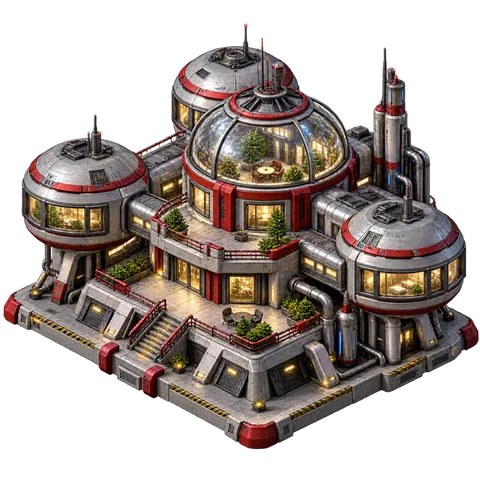 Robotic FutureLife support domeThe machinery that keeps air breathable, removes carbon dioxide and controls temperature: the beating heart of any space home.
Sources
The facts in this guide are based on these sources:
- Urban Land Institute, "UrbanPlan" program for high schools
- PBS, "e2 design" teacher guide, "Re-design your community" project
- American Planning Association, "What Is Planning?" and "City by Design" resources for young people
- National Council for the Social Studies, "College, Career, and Civic Life (C3) Framework"
- Next Generation Science Standards, MS-ETS1 Engineering Design