Part 33 of 35 Songs at midnight
The good news kept spreading. The apostle Paul traveled from city to city, telling people about Jesus. In Philippi, he and his friend Silas were beaten and locked in prison, with their feet fastened in wooden stocks.
"About midnight Paul and Silas were praying and singing hymns to God, and the other prisoners were listening to them" (Acts 16:25). Suddenly an earthquake shook the prison, the doors flew open and everyone's chains came loose. The jailer thought the prisoners had escaped, but Paul called out: "Do not harm yourself! We are all here!"
Trembling, the jailer asked: "Sirs, what must I do to be saved?" They answered: "Believe in the Lord Jesus and you will be saved, you and your household" (Acts 16:30–31). That same night he and his whole family were baptized, full of joy.
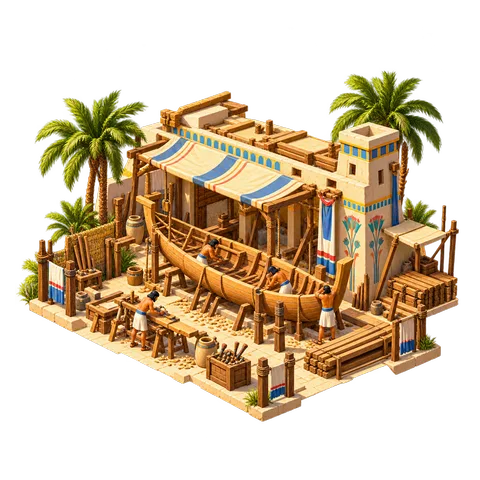
Imagined The workshop
Makers here build harps, trumpets and drums, and every instrument is finished by playing a song of praise.
Real world Philippi today
The ruins of Philippi, in northern Greece, include its Roman forum, its theater and some of the earliest churches in Europe. In 2016 they became a UNESCO World Heritage Site.
Real world The oldest hymn with music
The oldest known Christian hymn written down with its music was found on a scrap of papyrus at Oxyrhynchus in Egypt. It was copied around AD 300, and singers can still perform it today.
Art In this artwork
The illustration shows a marble workshop with open arches where golden harps and trumpets are being made.
Look closer
- Find a golden harp.
- Can you spot a trumpet?
Think about it
- Why do you think Paul and Silas sang in prison?
- What did they tell the jailer he must do to be saved?
- How does music change the way you feel?
Key words
- Hymn
- A song of praise to God.
- Stocks
- A wooden frame that held a prisoner's feet.
- Jailer
- The person in charge of a prison.
Sources
Bible quotations are from the Berean Standard Bible, which is in the public domain. The other facts on this page come from these sources:
- The Bible, Acts of the Apostles
- UNESCO World Heritage Centre, "Archaeological Site of Philippi"
- The Oxyrhynchus Papyri, volume 15 (1922), no. 1786: a Christian hymn with musical notation