Real world A car for everyone
Early cars were handmade and expensive. In 1908 Ford introduced the Model T, and from 1913 built it on a moving assembly line, which cut the price so far that millions of families could buy one.
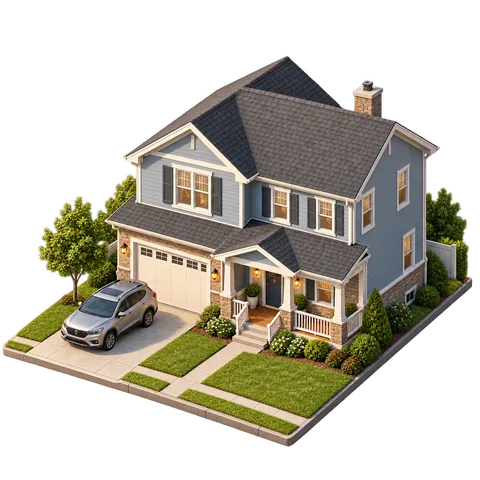
Cars made it possible to live far from work and shops. Towns spread out into suburbs, with wide roads, highways and large parking lots.
Real world The hidden cost of parking
A private car sits parked for most of the day. The planner Donald Shoup showed how much land towns give to parking, and argued that free parking encourages more driving and makes everything else more spread out.
Real world Safer and cleaner
Seat belts are one of the most important safety inventions ever: they greatly reduce the risk of death in a crash. Today more and more cars are electric, which means no exhaust fumes in the street, though making electricity and batteries still has an environmental cost.
Art In this artwork
This illustration shows a small red hatchback. The back view shows the trunk door that opens upward.
Look closer
- Compare the front and back views.
- Where would a family put their shopping?
Think about it
- How would your town look if nobody owned a car?
- What could a parking lot be used for instead?
- Who can't drive, and how do they get around?
Key words
- Assembly line
- A factory system where a product moves past workers who each add one part.
- Suburb
- A mainly residential area on the edge of a city.
- Emissions
- Gases released, for example from an exhaust pipe.
Sources
The facts on this page are based on these sources:
- Encyclopaedia Britannica, "Automobile" and "Model T"
- Donald Shoup, "The High Cost of Free Parking" (2005)
- US National Highway Traffic Safety Administration, "Seat Belts"
- International Energy Agency, "Global EV Outlook"