Imagined What it could do
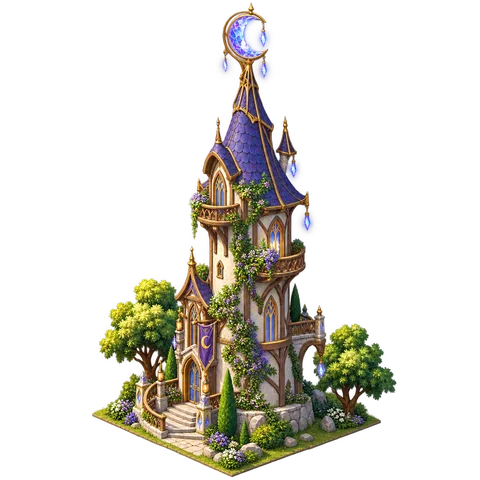
Imagine a slender spire that stays fresh on the hottest day. Warm air rises up and out of its tall chimney, drawing cool air in from shaded gardens below, so the rooms breathe without fans or air conditioners.
Real world Copying termites
Some African termites build huge mounds with networks of tunnels. In the 1990s, architect Mick Pearce studied them when designing the Eastgate Centre, an office and shopping building in Harare, Zimbabwe. It uses heavy concrete to store the night's coolness, fans to flush air at night, and tall chimneys that let warm air rise out. The architect's firm reports that it uses about a third less energy than similar buildings with full air conditioning.
Since then, scientists have learned that termite mounds work in more complicated ways than first thought, but the building still shows how passive design can save energy.
Real world The stack effect
Warm air is lighter than cool air, so it rises. In a tall space with openings at the top and bottom, rising warm air pulls fresh air in below. This "stack effect" has been used for centuries, for example in the wind-catcher towers of the Middle East and Iran, which catch breezes and push air through buildings.
Art In this artwork
This illustration shows a slender stone spire with leaf-covered walls. Here we imagine it breathing like a termite mound.
Look closer
- Find openings near the top where warm air could escape.
- Notice the plants at the base. How might they cool the air?
Think about it
- How do you keep cool on a hot day without electricity?
- Why might copying termites be useful for architects?
- What other animals build clever homes?
Key words
- Passive cooling
- Keeping cool without machines.
- Stack effect
- Warm air rising and drawing cool air in below.
- Biomimicry
- Copying ideas from nature.
Use it in class
- Biomimicry examples for students (Explainer, grades 4-12)
Sources
The real-world facts on this page are based on these sources:
- Mick Pearce, architect, project information on the Eastgate Centre, Harare (1996)
- Biomimicry Institute, AskNature database of nature-inspired design
- Janine Benyus, "Biomimicry: Innovation Inspired by Nature" (1997)